Building a Self-Watering Raised Bed Garden for People Who Travel

I travel a lot for work. That has historically made having a vegetable garden somewhere between difficult and pointless — you plant things, go away for a week, come back to dead plants. I wanted to solve that problem.
The answer was a self-watering raised bed. The idea is simple: build a water reservoir into the bottom of the bed, and let the soil wick moisture up to the roots as needed. The plants take what they need, when they need it. You fill the reservoir every week or two and otherwise leave it alone.
I also had a deer problem. My backyard is basically a deer buffet. Without some kind of fence, nothing survives.
Here’s what I built and how it works.
The Before
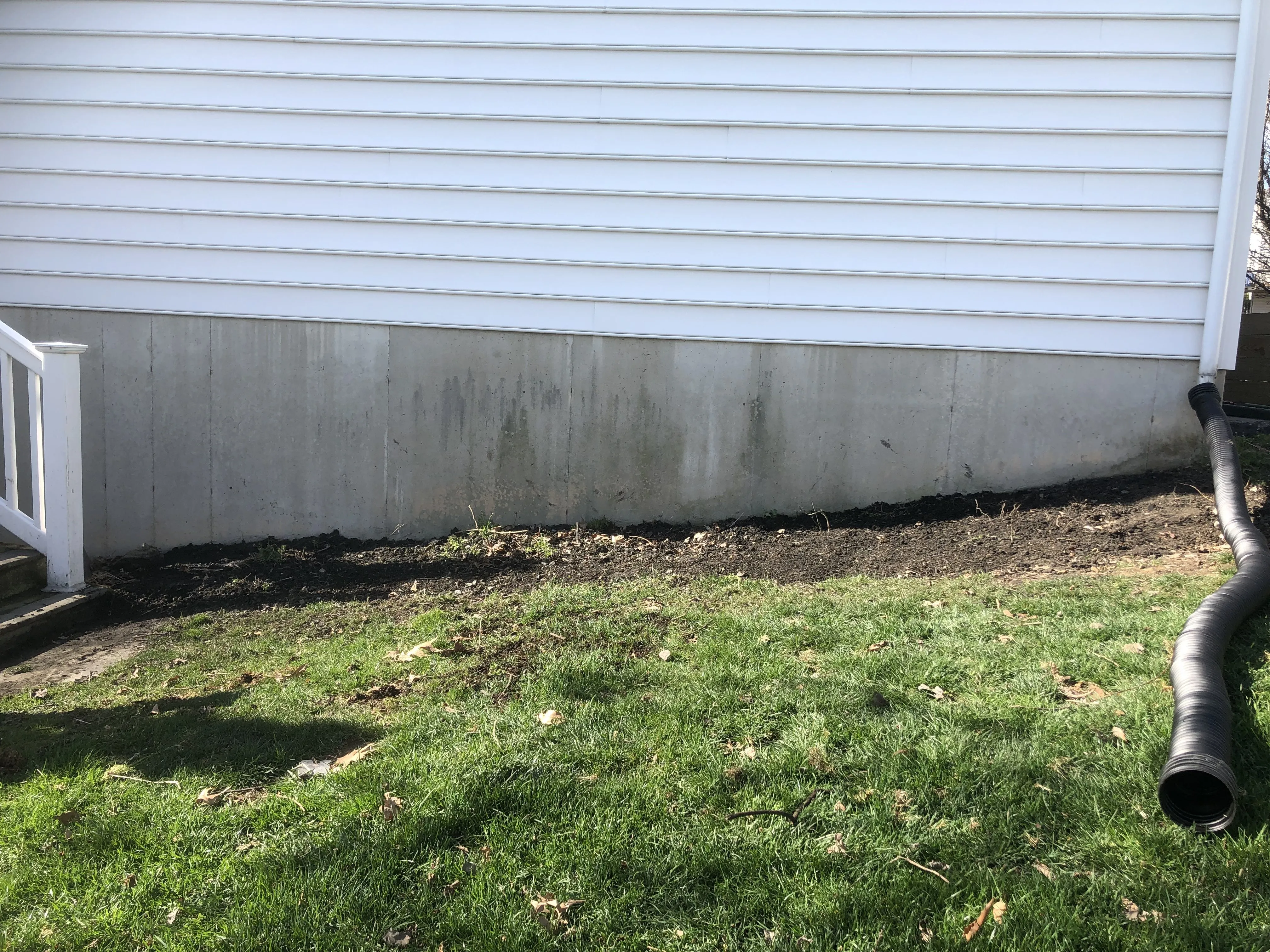
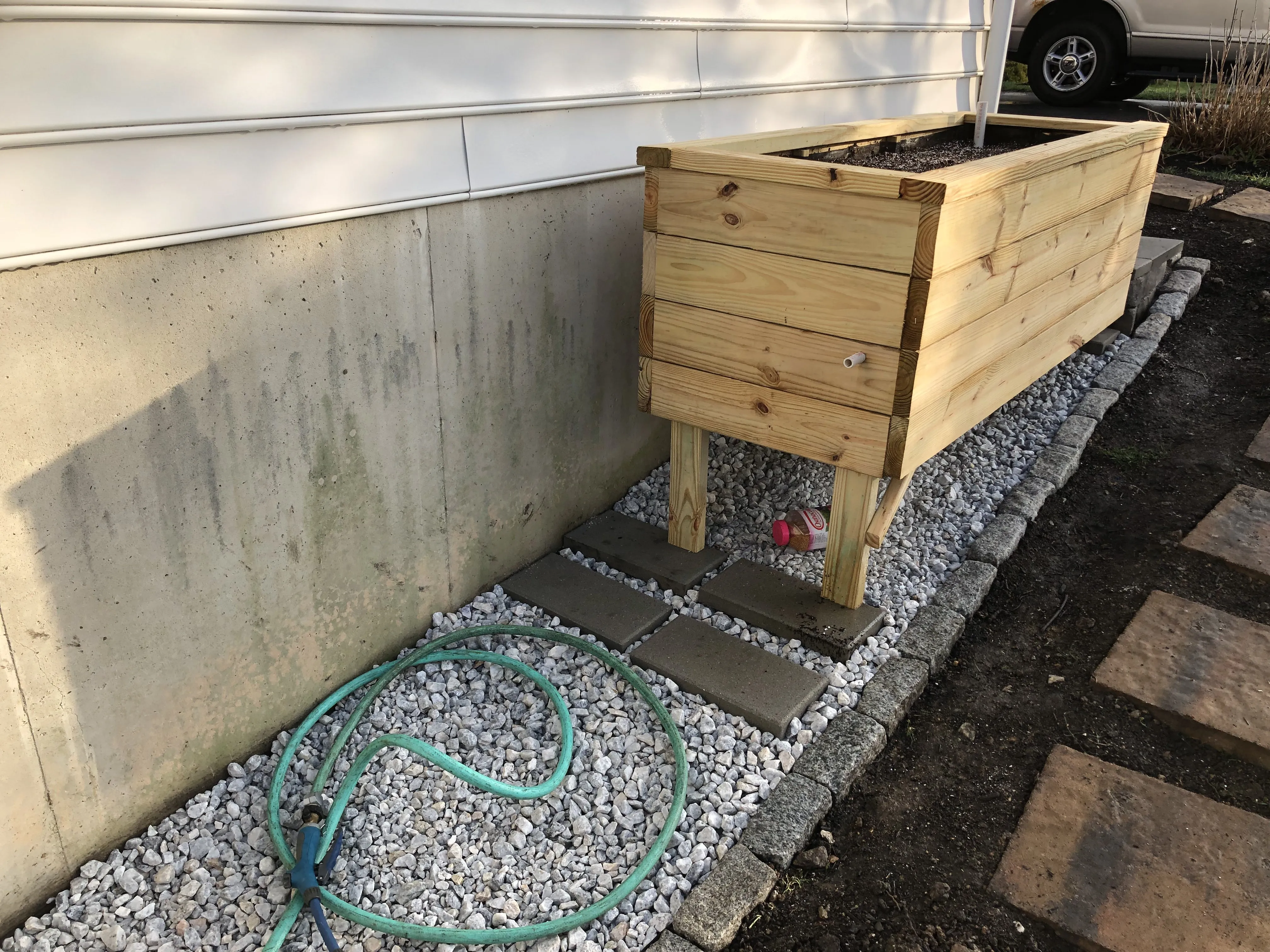
The spot I chose was along the side of the house — a narrow strip of bare dirt between the foundation and the lawn that wasn’t being used for anything.
The Build
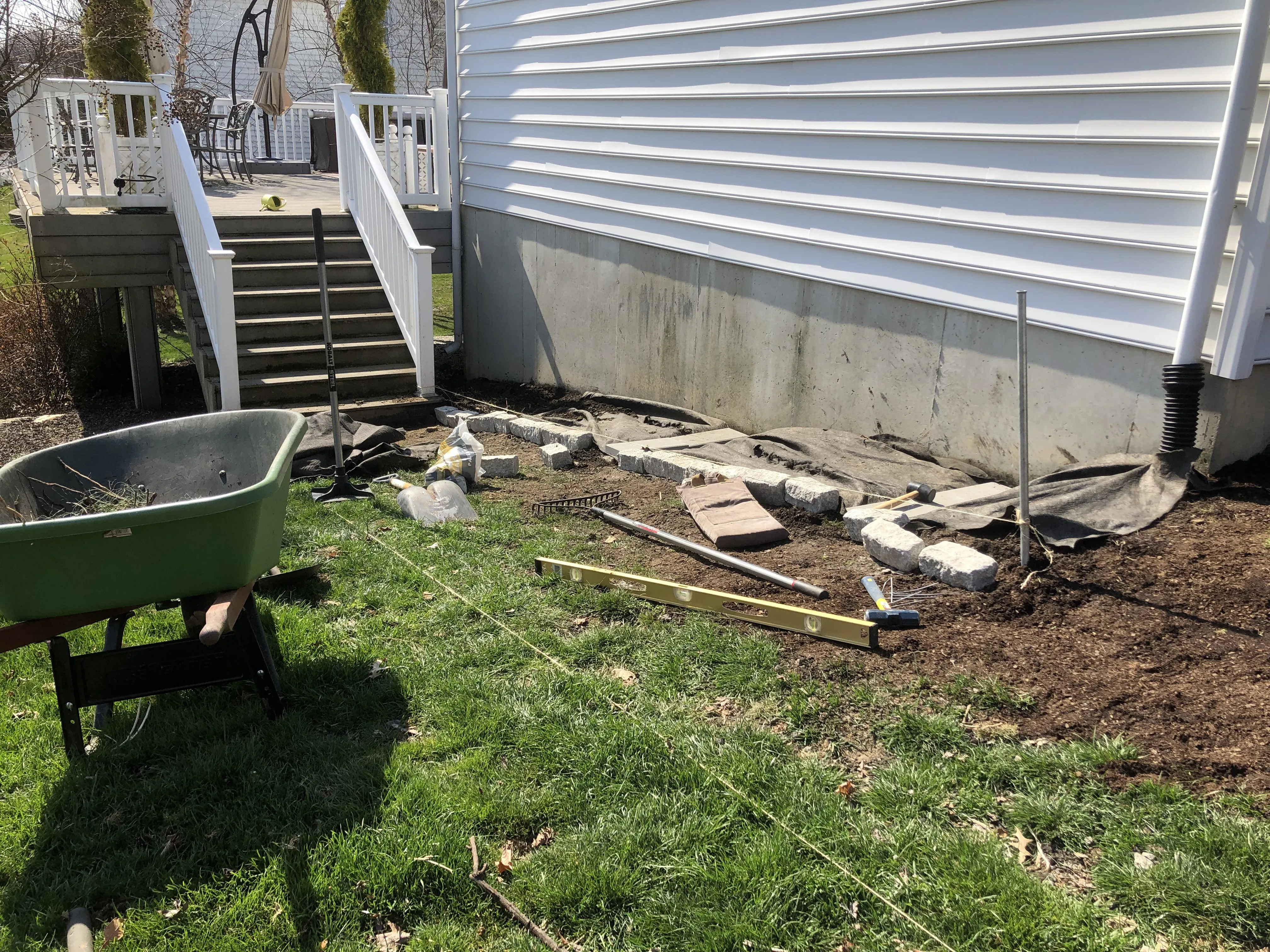
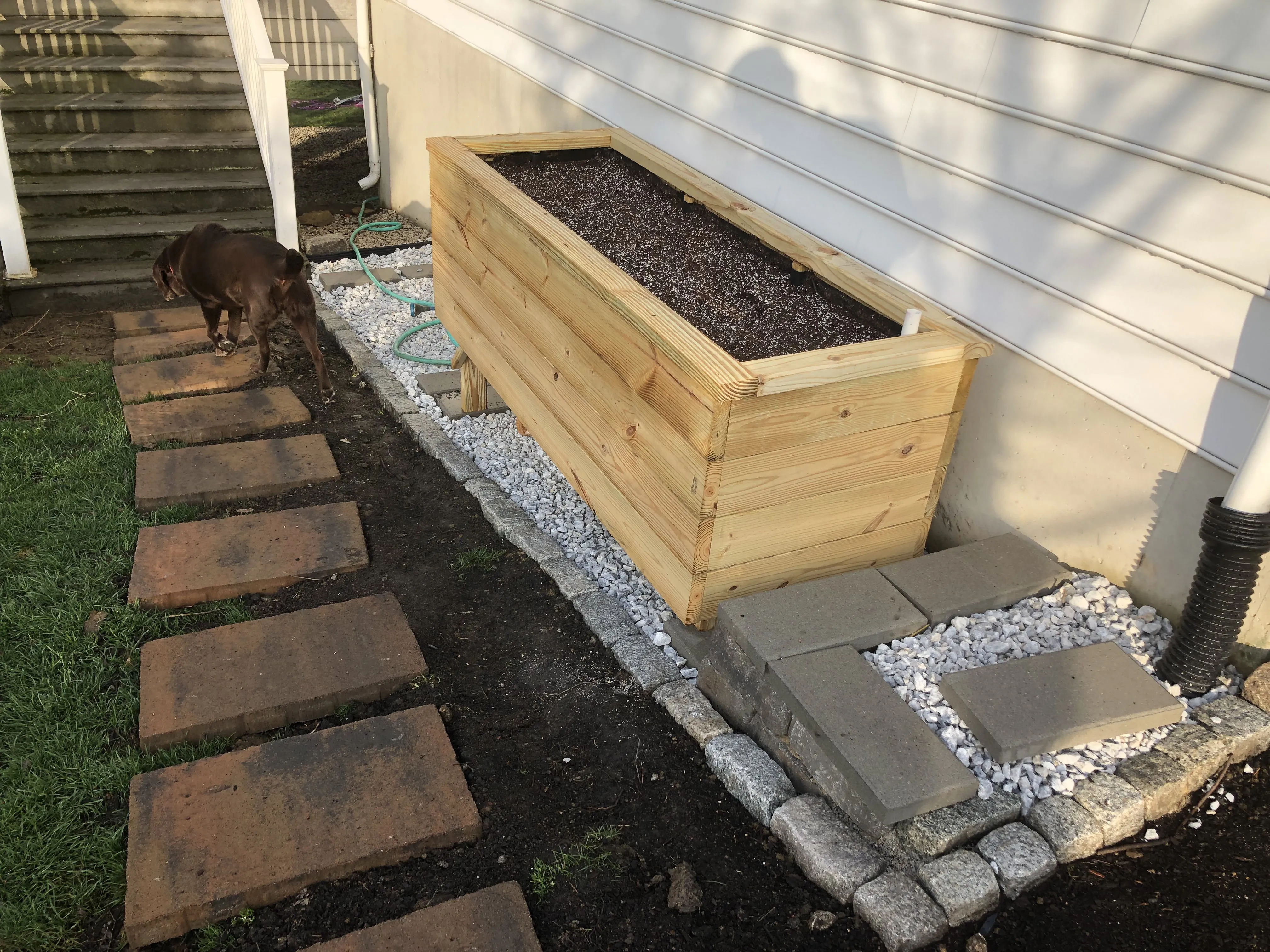
I built two raised beds, each on short legs to keep them off the ground and manage the slope.
The surrounding area got landscape fabric and gravel, with brick pavers as stepping stones between and around the beds. This keeps the whole area clean, prevents weeds, and looks decent even when nothing is growing.
The Wicking System
This is the part that makes the whole thing work for a traveler.
The bottom of each bed is lined with a heavy-duty black pond liner. On top of the liner, I laid three runs of corrugated perforated drainage pipe — the kind used for French drains. These pipes sit in the bottom of the bed and form the water reservoir. A vertical fill pipe (a short section of PVC) extends up through the soil so you can pour water directly into the reservoir without disturbing the bed.
Landscape fabric goes over the pipes to keep soil out of the reservoir, and then the bed fills up with potting mix on top.
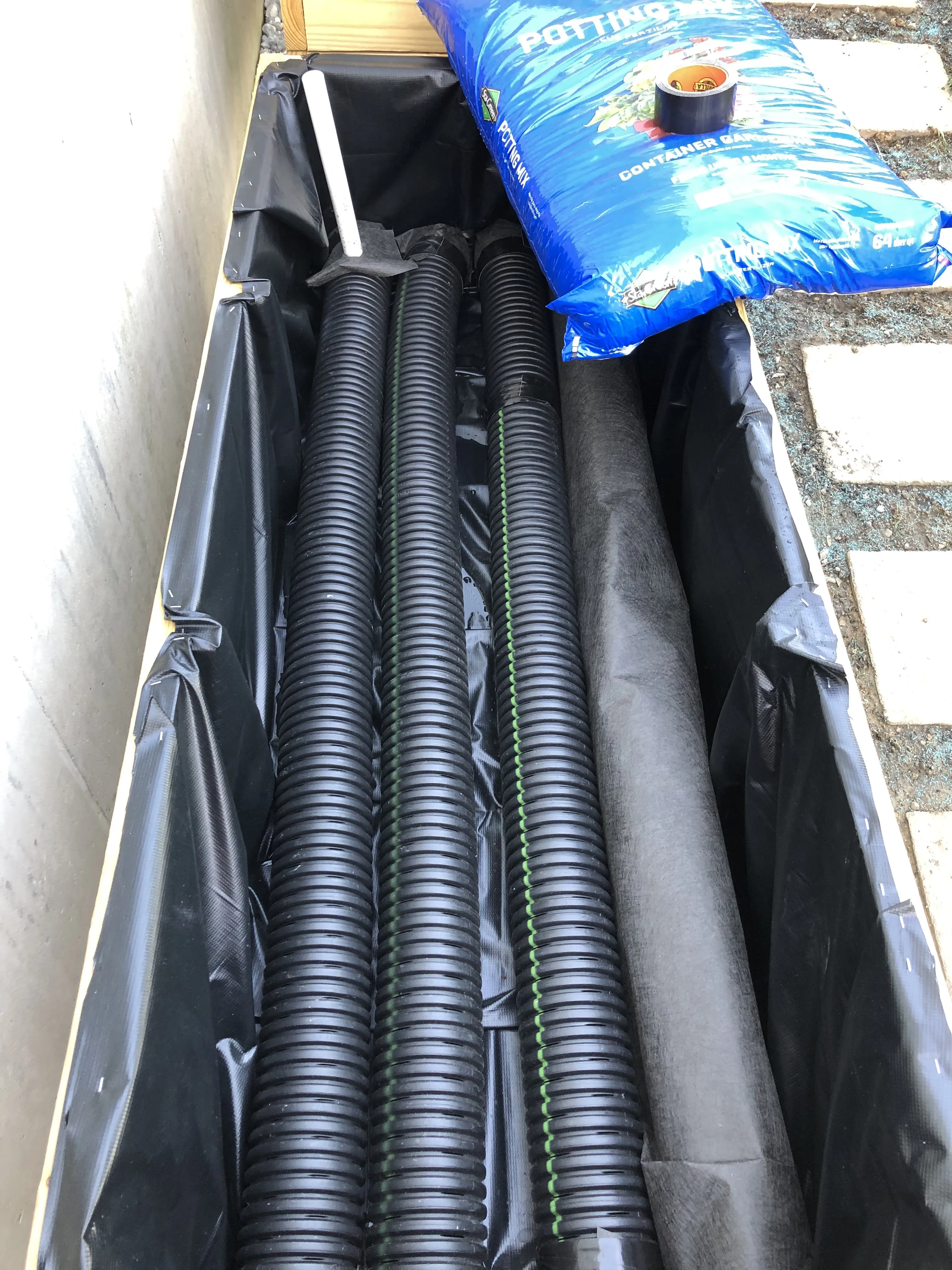
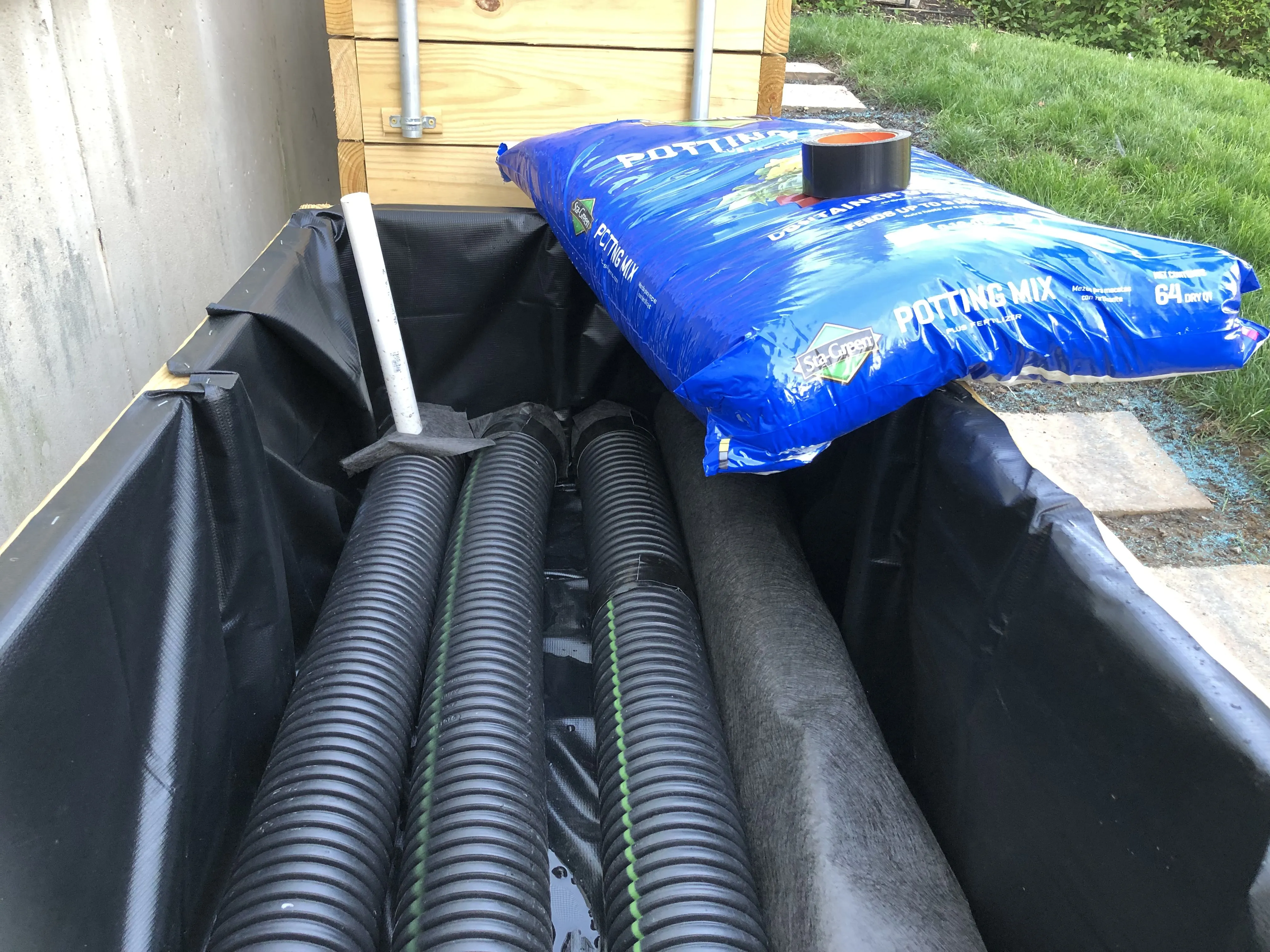
When you fill the reservoir through the PVC pipe, the water sits at the bottom and wicks upward through the soil as the plants need it. There’s a small overflow hole drilled in the side of the liner so the reservoir never overfills. The soil stays consistently moist from below — not waterlogged, not dried out.
In practice, I fill the reservoir before I leave on a trip and the beds take care of themselves for 7–10 days without any intervention.
The design is based on what’s commonly called a wicking bed or SIP (Sub-Irrigated Planter). If you want to go deep on the engineering, these are good references:
- AlboPepper — SIP Wicking Bed Guide — very detailed, with years of real-world testing
- Deep Green Permaculture — Wicking Bed Construction
- Instructables — Raised Bed Wicking Garden
The Deer Fence / Trellis Frames
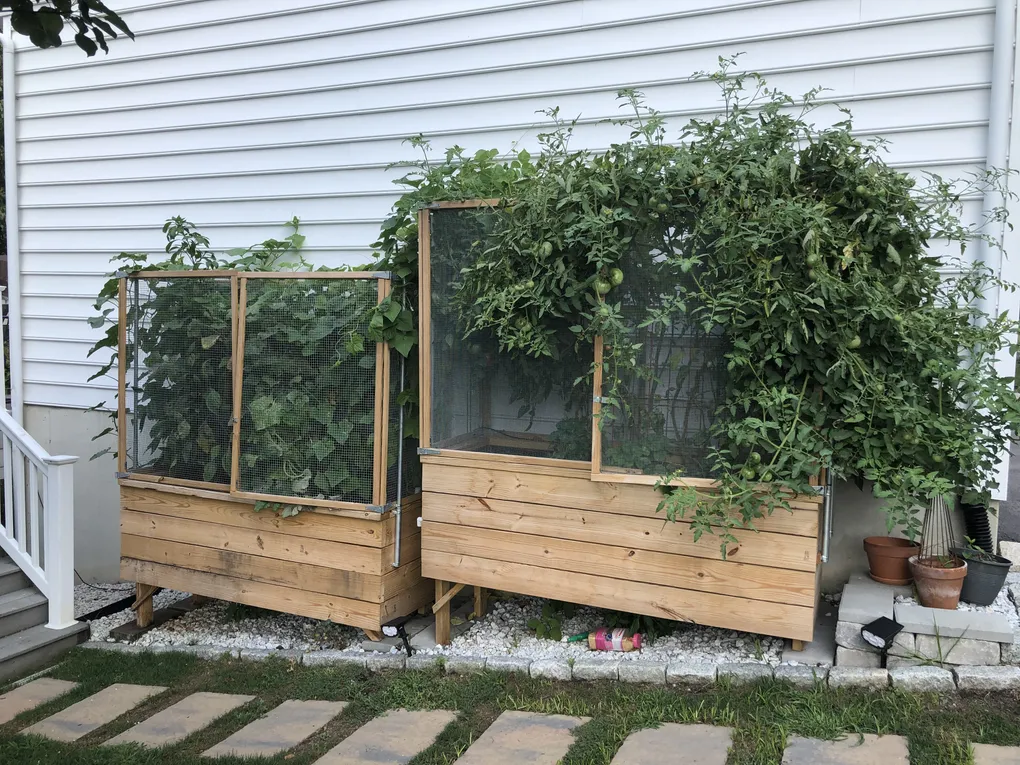
Without some kind of barrier, deer will eat everything down to the soil. I built simple wooden trellis frames that attach to the top of each bed — vertical wood posts with hardware cloth panels stapled in. The frames do double duty: they keep the deer out, and they give climbing plants something to grow on.
The cucumbers go in at the sides and are trained to climb up and over the frames. By mid-summer they’re arching over the top. The frames are built to hinge open so you can get in and harvest without fighting the structure.
What I Plant and When
I run a simple rotation through the season:
Early spring: Lettuce, spinach, and other cool-weather crops fill both beds. These go in as soon as the soil is workable and are done before the summer heat arrives.
After the lettuce: I pull everything, add a little compost, and replant. Tomatoes go in the center sections — they’re the main event and need the most room. Peppers go alongside them. Cucumbers go at the edges where they can climb the trellis frames up and over.
By late summer the beds look like this — completely overrun with tomatoes spilling over the frames:
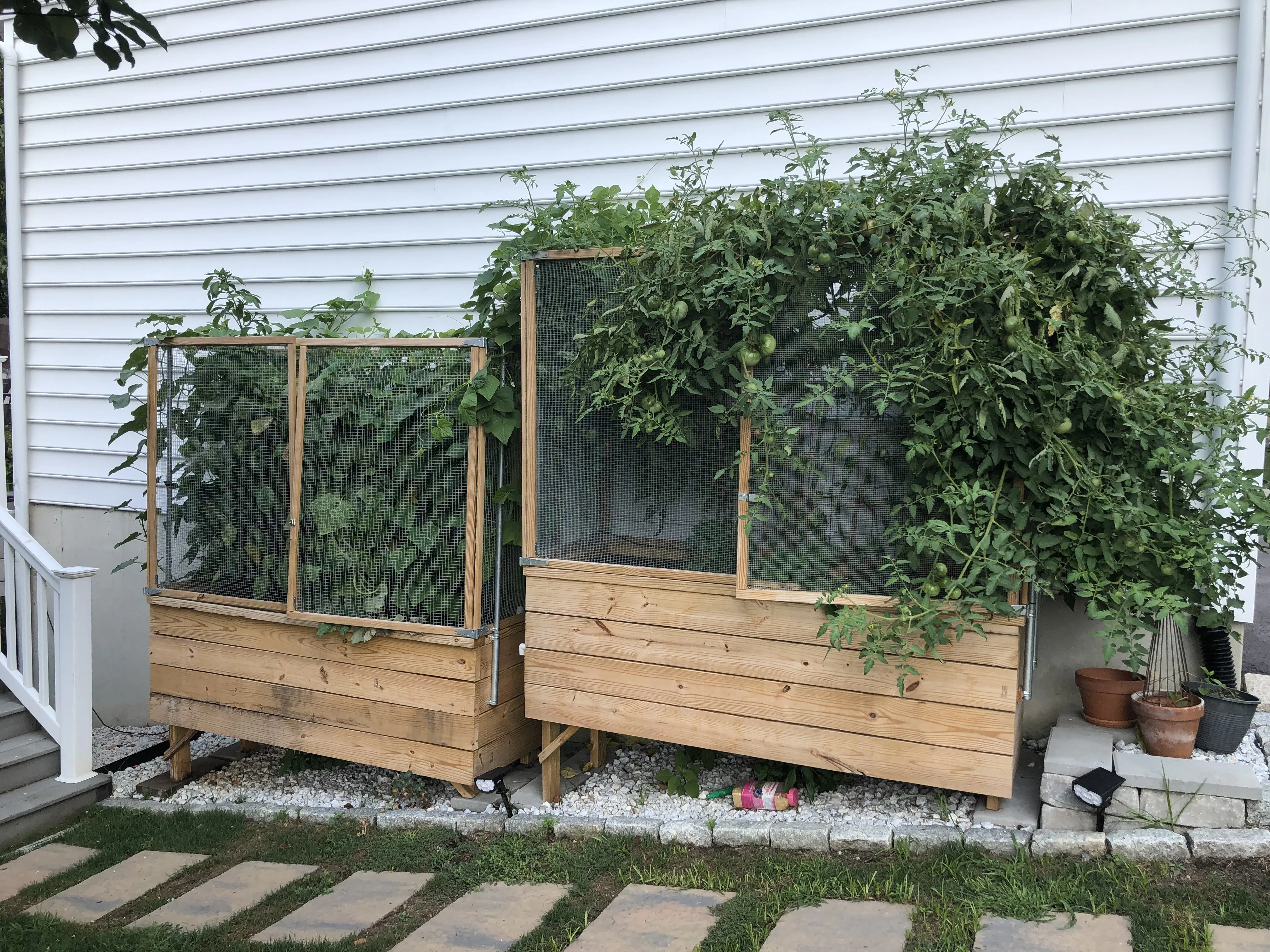
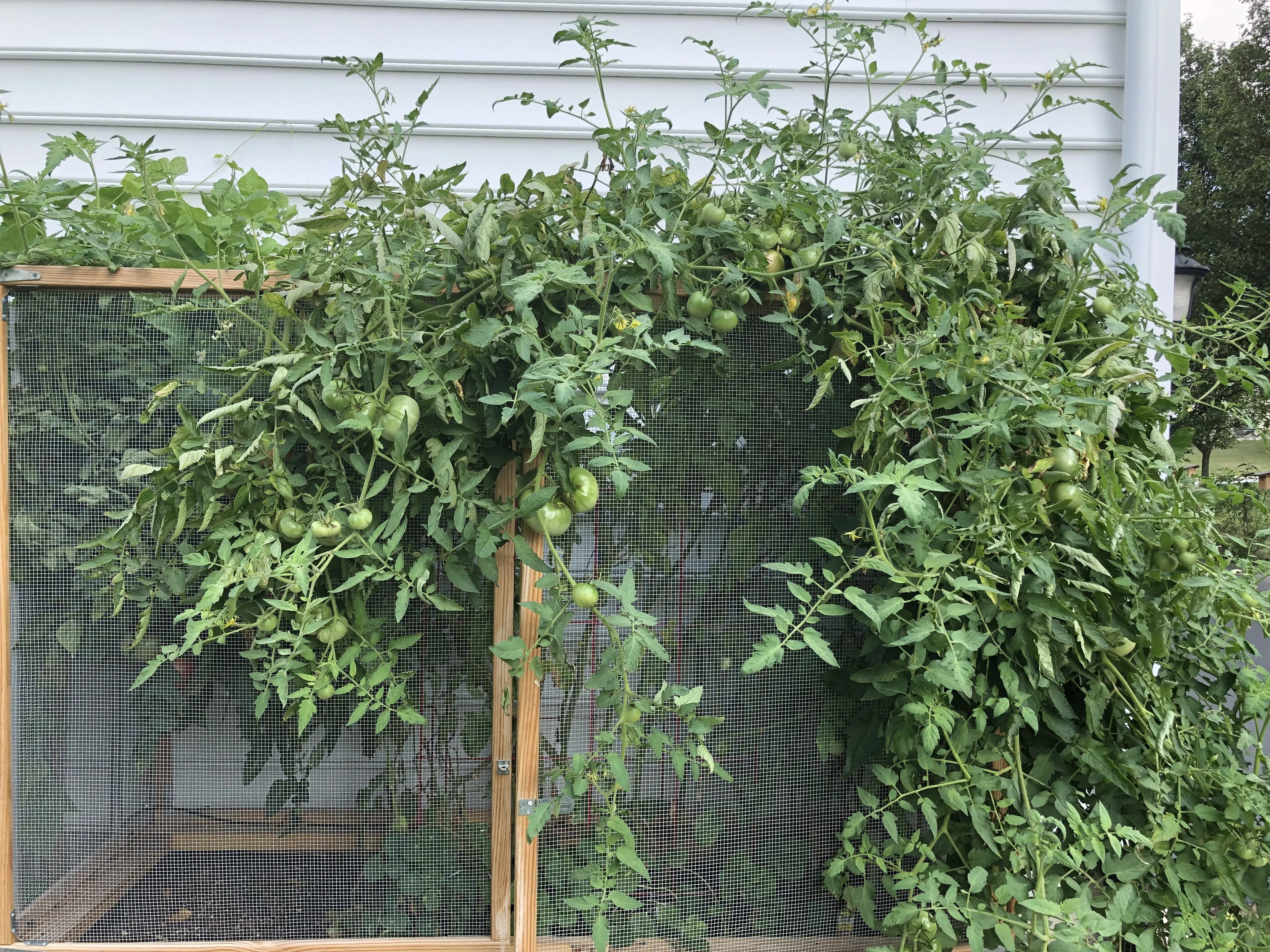
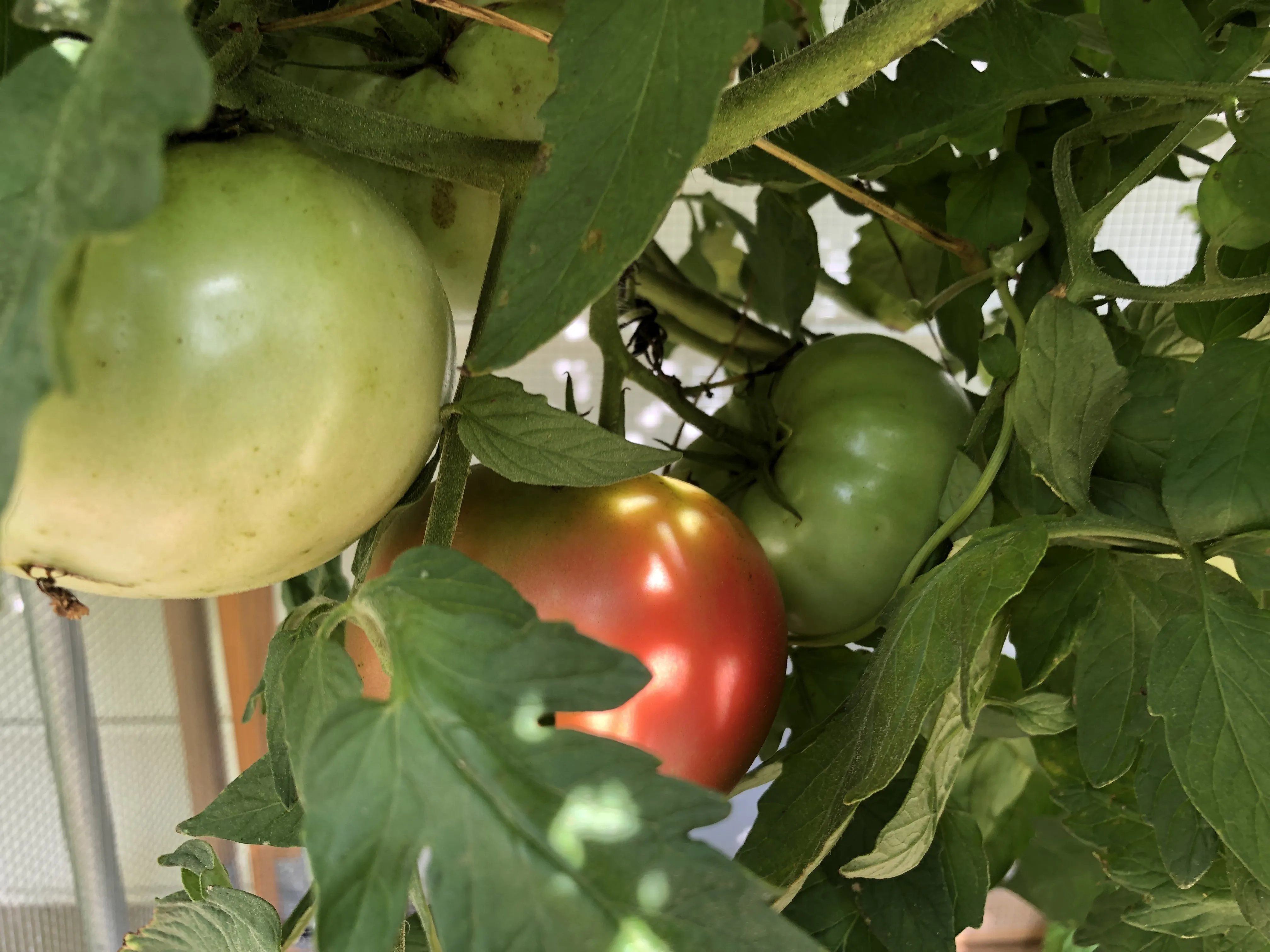
It produces more than we can eat, which is the right problem to have.
Tips If You’re Building This
- The wicking system is the whole point. If you travel or just forget to water, this is what saves you.
- Legs off the ground. Keeps the bottom from rotting and makes the beds easier to work in.
- Gravel surround. Makes the whole area low-maintenance and keeps mud out. Landscape fabric underneath so weeds don’t come up through it.
- Build the deer fence into the design from the start. Don’t add it as an afterthought — integrate it with the bed structure so it’s solid and doesn’t look like a cage.
- Use the trellis for cucumbers. They naturally want to climb. Let them go up and over. You get more fruit and they stay off the soil.
- Succession plant. The early cool-weather crop comes out before it bolts, you refresh the soil, and the summer crop goes in. Same space, two harvests.