Building Cinderella: Engineering a Real Working Clock Tower

Every production of Cinderella lives or dies by the midnight scene. The ball, the dance, the prince — all of it is building toward one moment: the clock strikes twelve, the spell breaks, and Cinderella has to run. For our 2019 production, we wanted the audience to feel that countdown from the moment they walked in the door.
The answer was a clock tower. A real one, with real moving hands, that actually counted down to midnight.
The Concept: First Thing You See
The clock tower was designed to live on the proscenium — the full height of the stage opening. When the audience arrived and found their seats, the first thing they saw was this tower, already glowing, already ticking. The clock was set to 11:45.
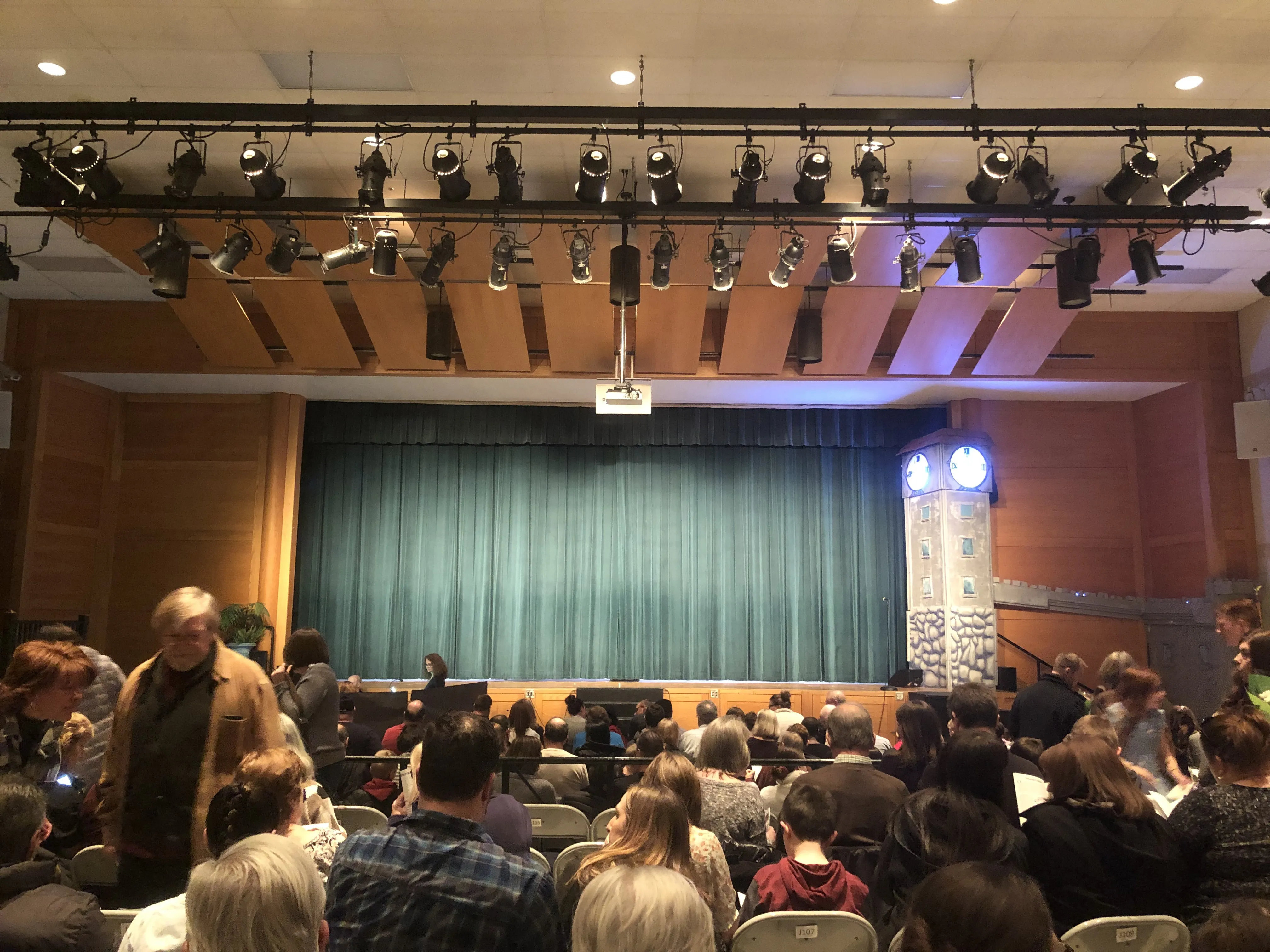
The clock counts down in real time throughout the ball scene. As Cinderella danced with the prince, the minute hand moved. As the scene built toward its climax, the clock approached midnight. When it struck twelve, the bell rang, and Cinderella ran.
To pull this off, I needed a clock that actually worked. Not a painted prop. A real, manually operated mechanical clock.
The Clock Mechanism
I am not a clockmaker. But I know PVC pipe and I know counterweights, and it turns out that’s enough.
The Clock Face
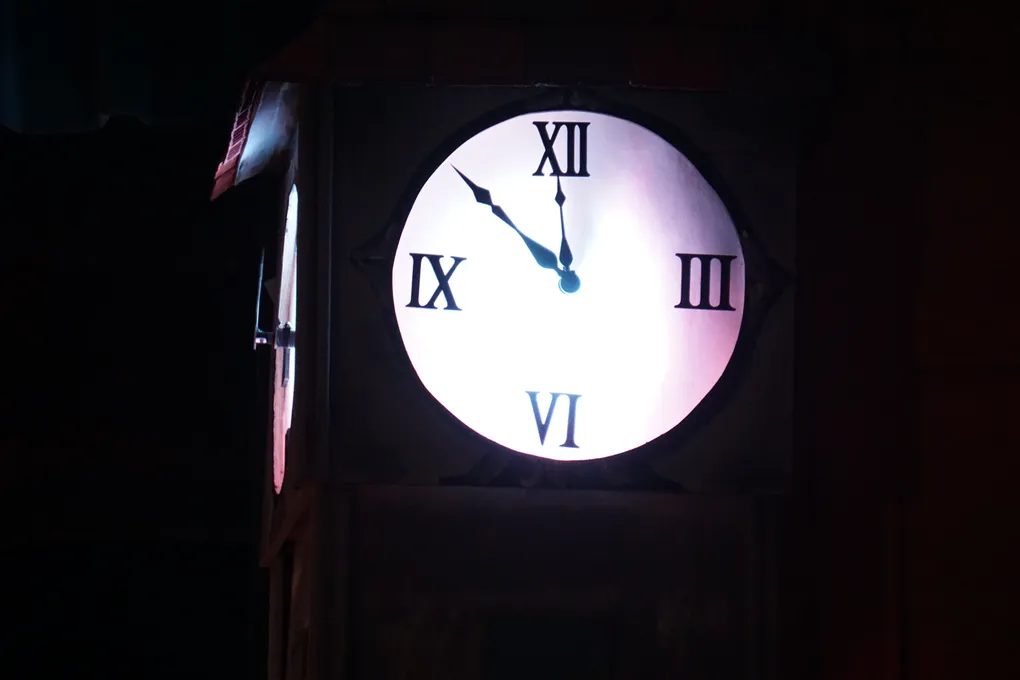
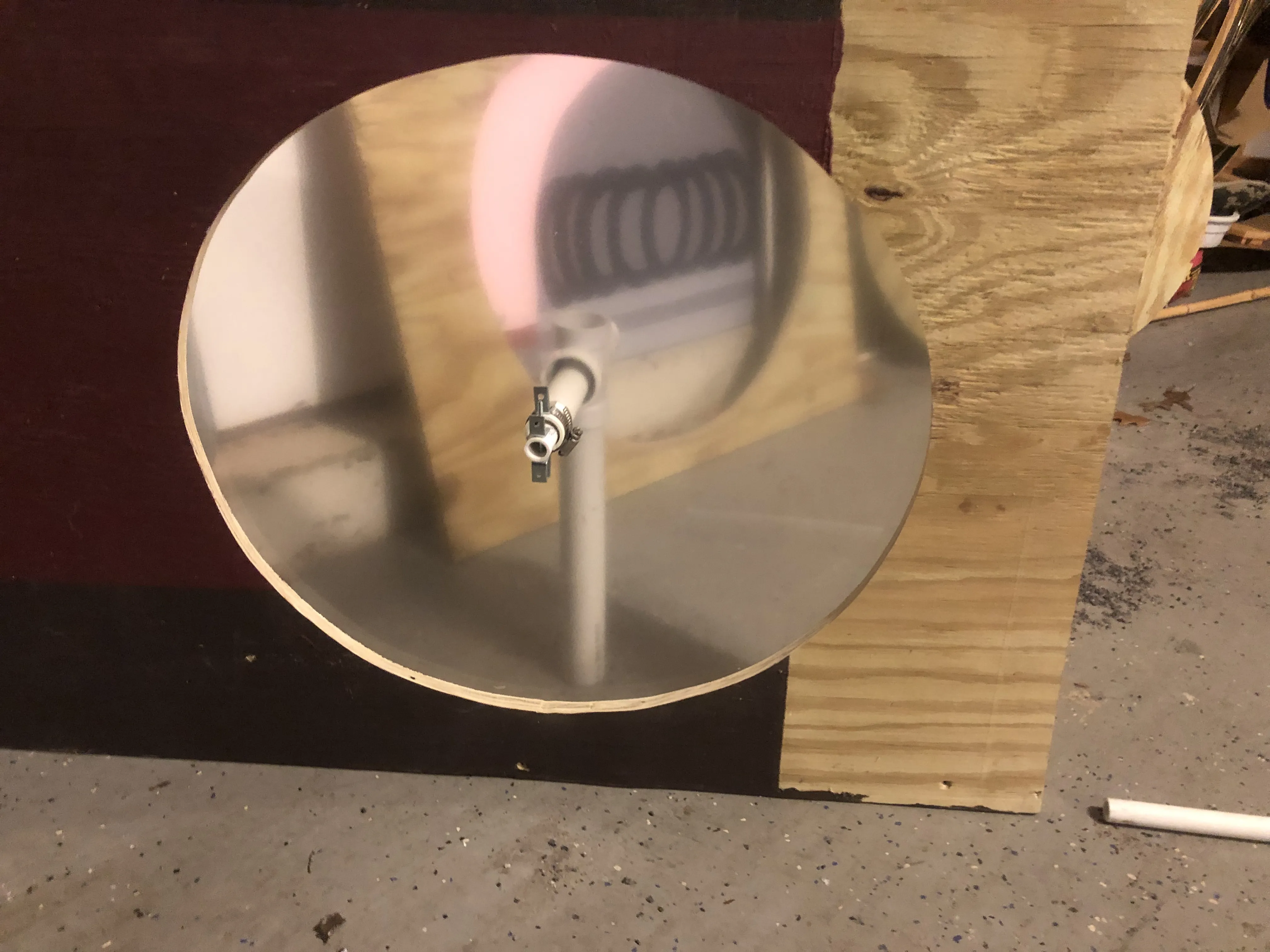
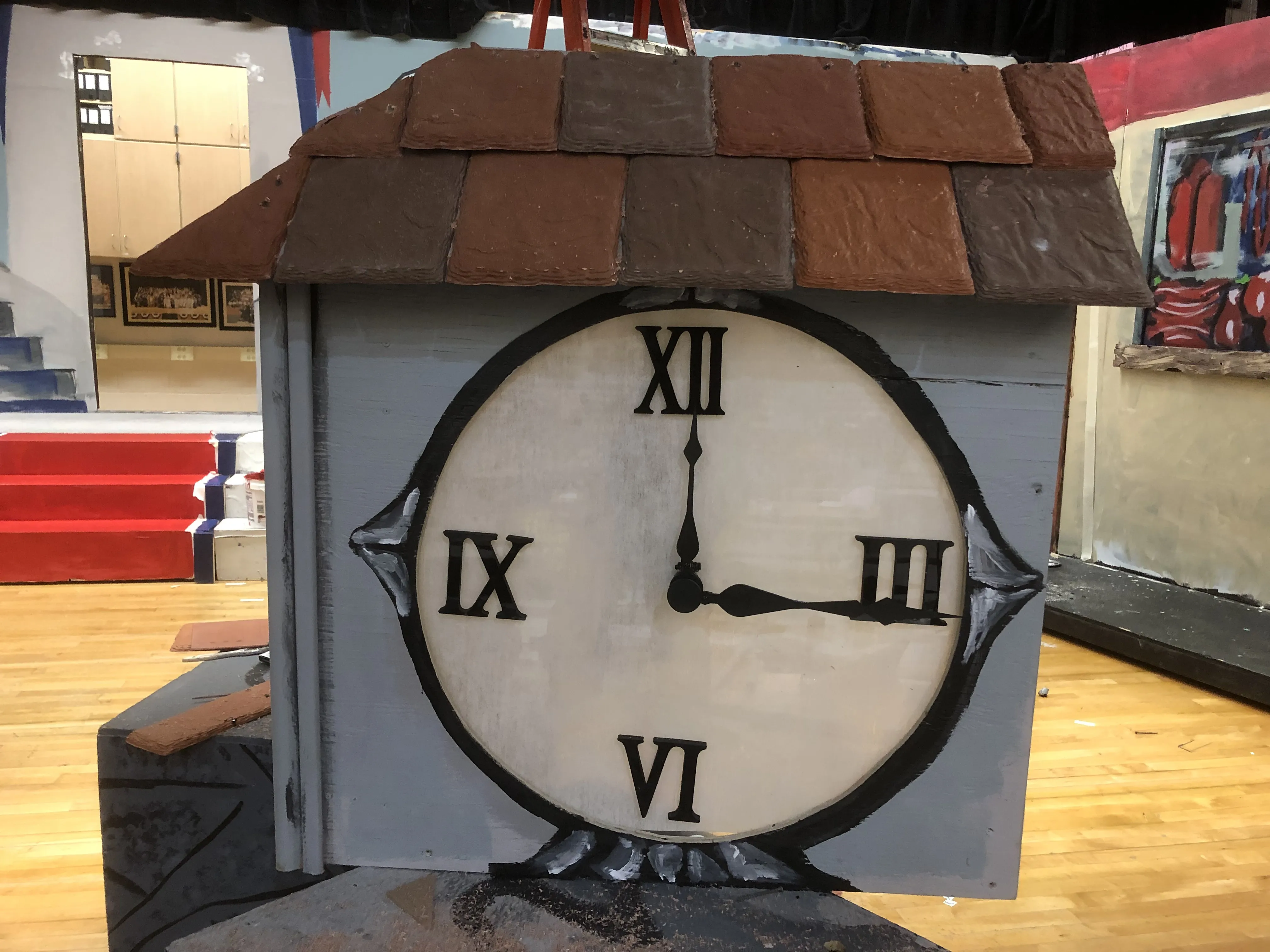
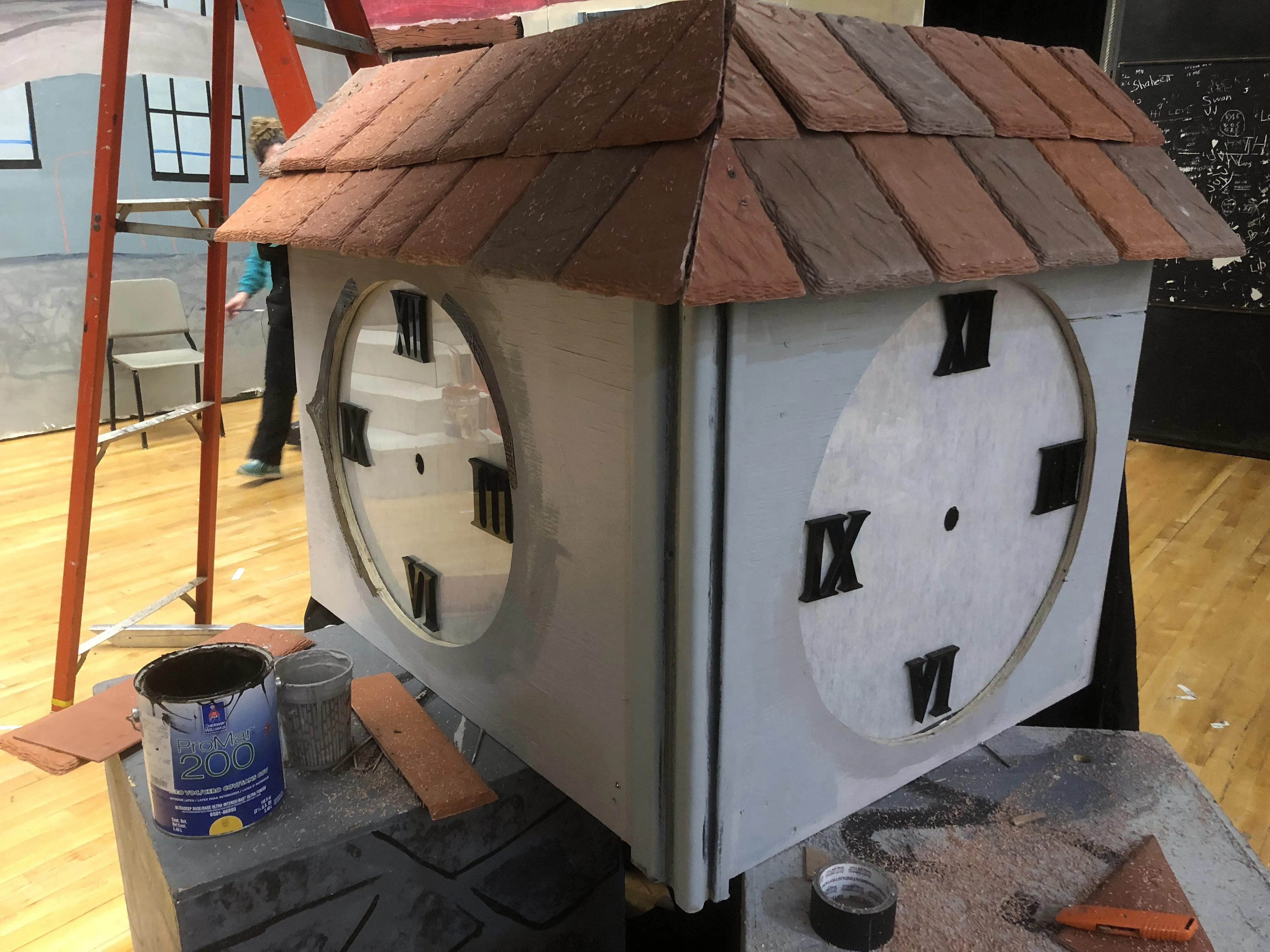
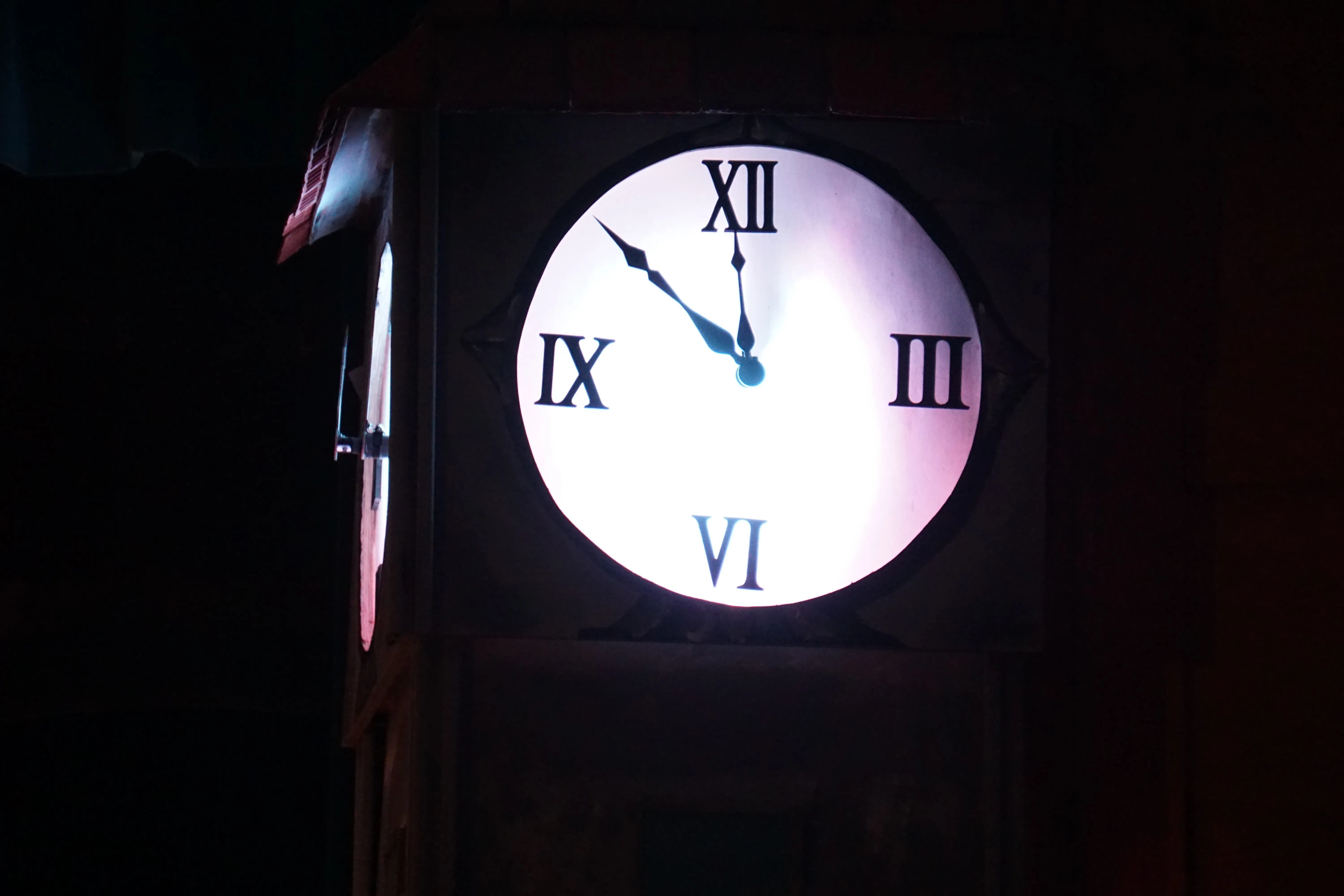
The face is a large circular plexiglass disc set into a wooden frame. Plexiglass was the right choice because it’s rigid, cuttable to a perfect circle, and — critically — transparent. The audience sees the hands. The lighting inside the tower shines through. It glows.
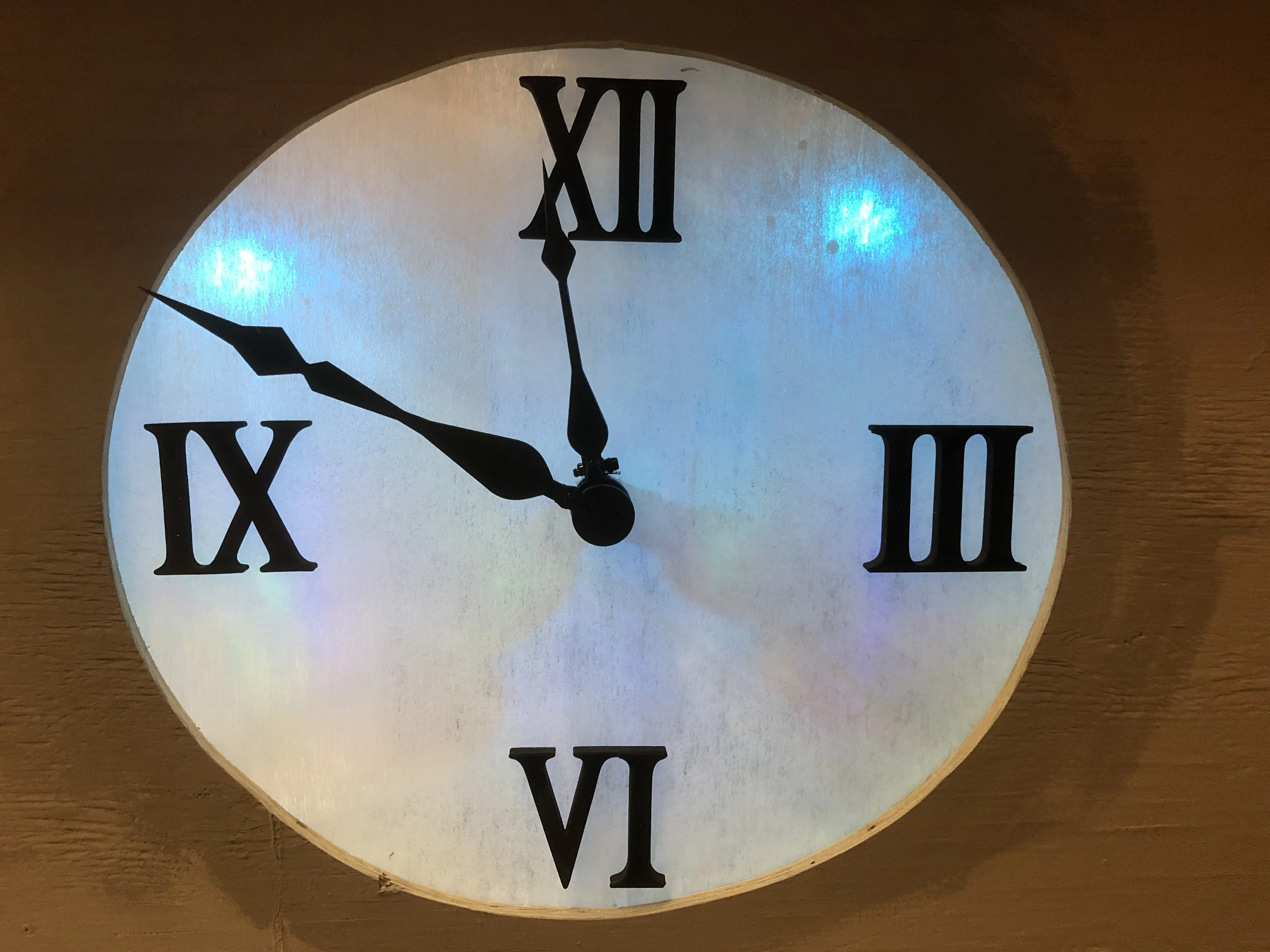
The Roman numerals are cut from black material and applied to the face. The four cardinal numerals — XII, III, VI, IX.
The Hand Pivot
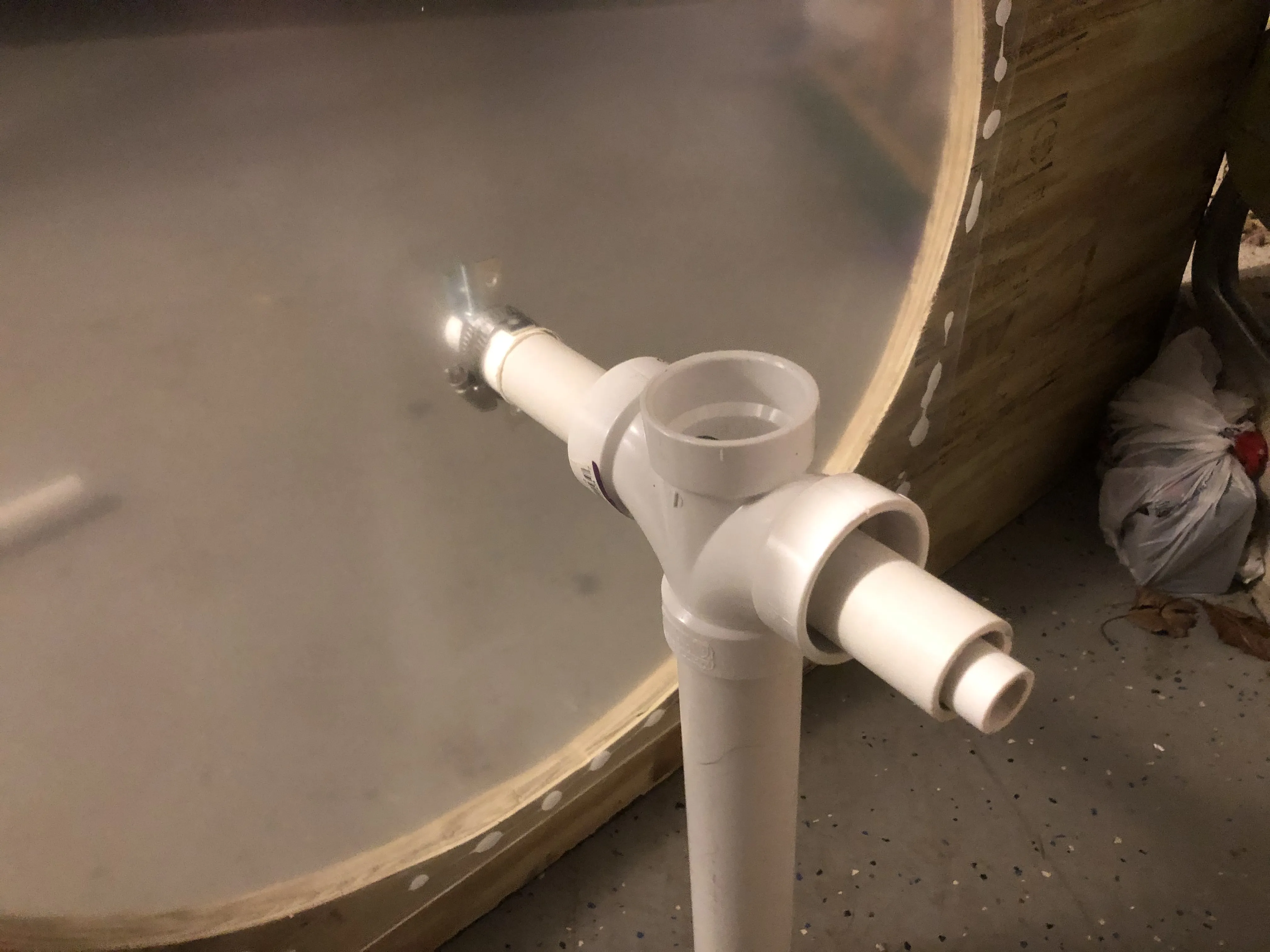
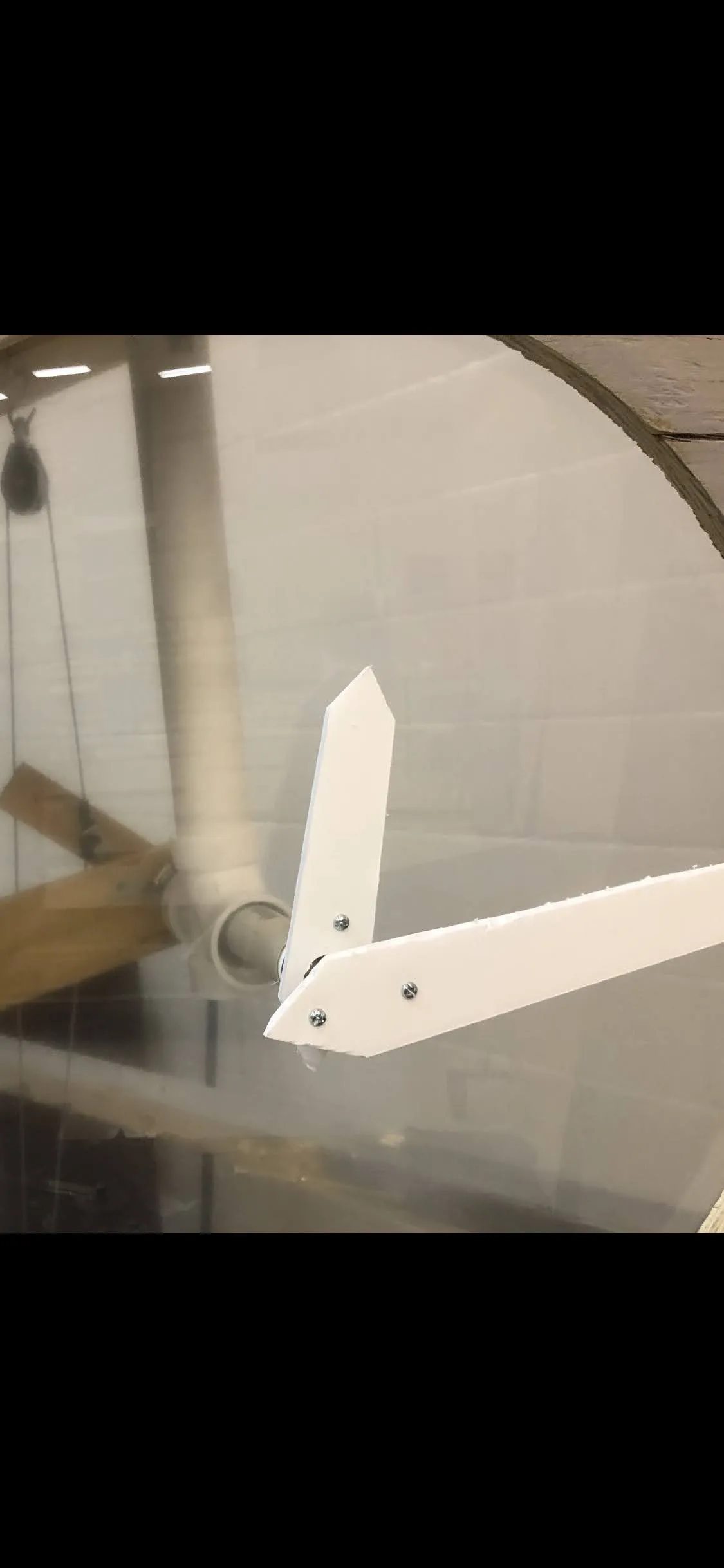
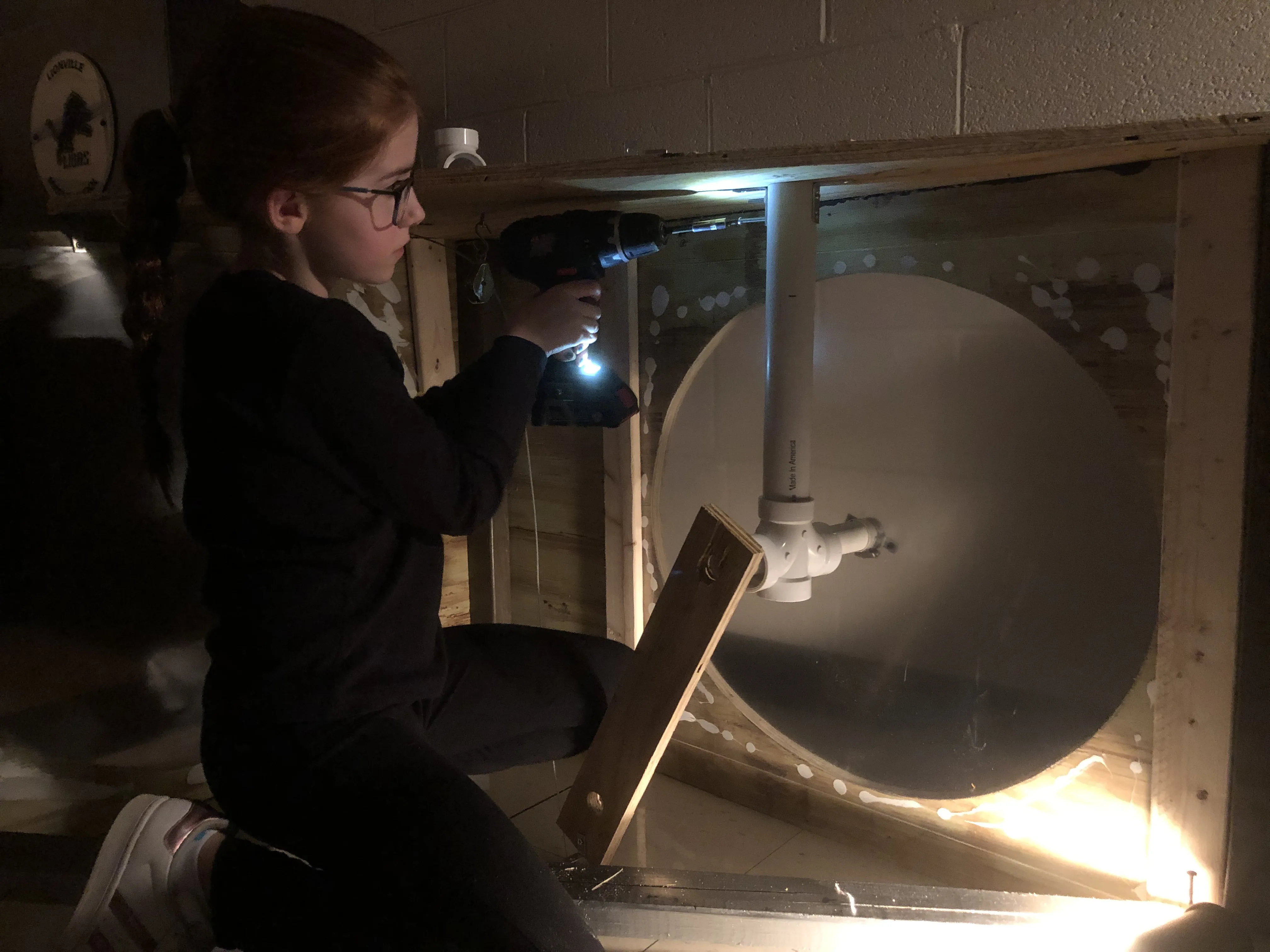
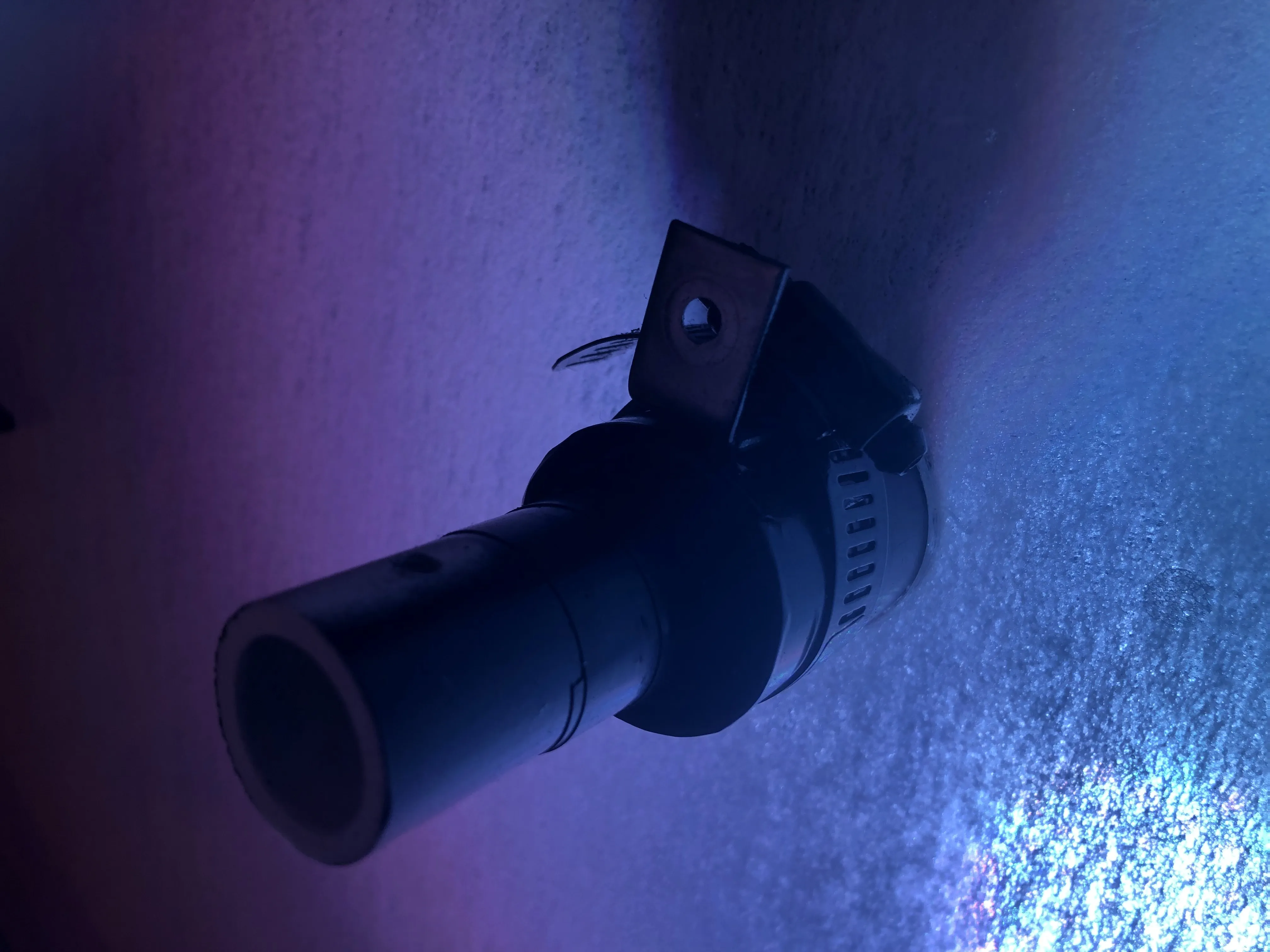
The hands rotate on a central PVC pipe axle. This is where the mechanism gets interesting. A clock has two hands that must rotate on the same center point but at different speeds — the minute hand moves 12 times faster than the hour hand.
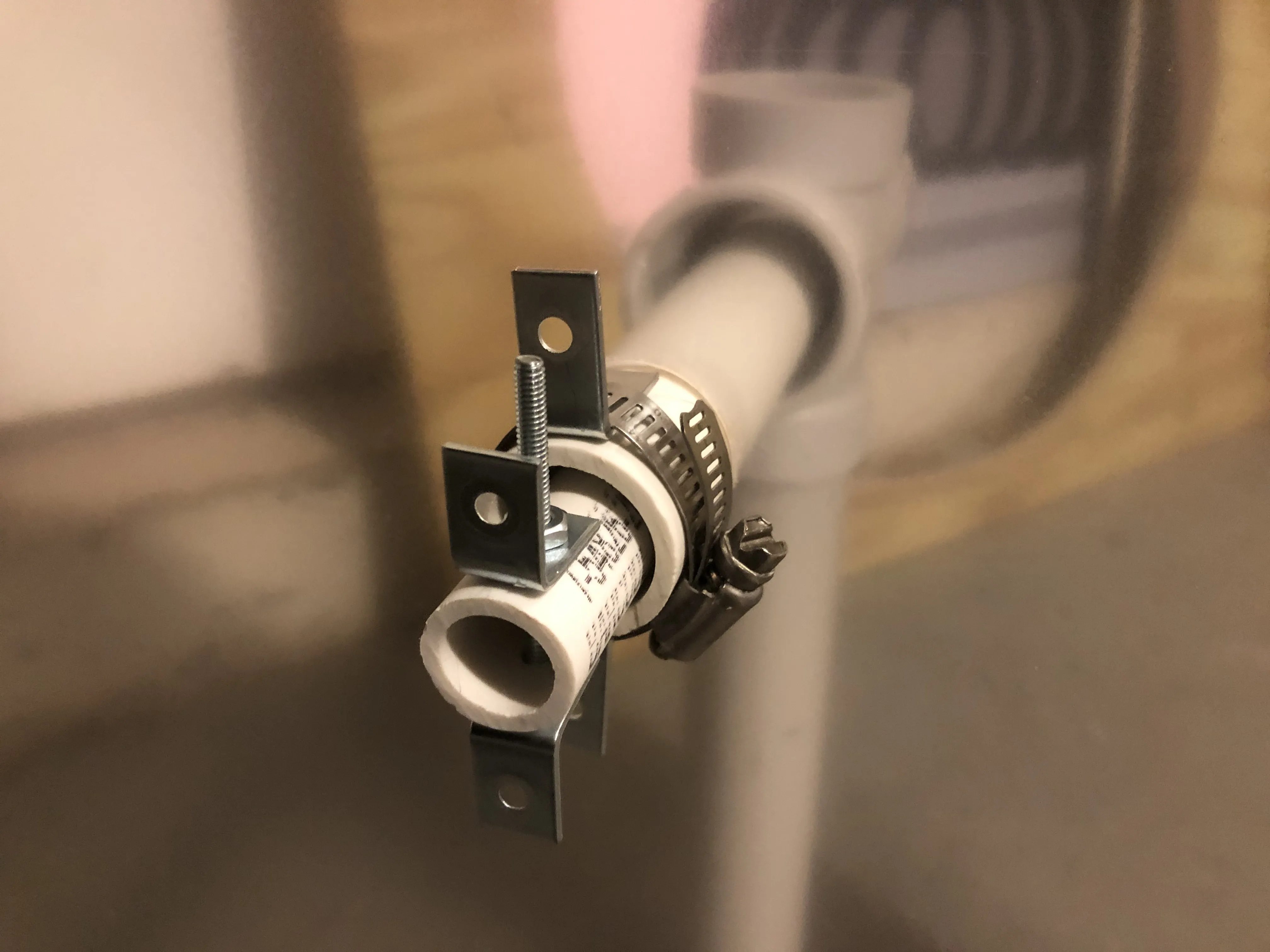
I solved this with nested PVC pipes. The minute hand mounts to an outer pipe that rotates around an inner pipe. The inner pipe carries the hour hand. A hose clamp and bracket assembly acts as the bearing, keeping everything aligned and rotating smoothly.
The Cable and Counterweight System
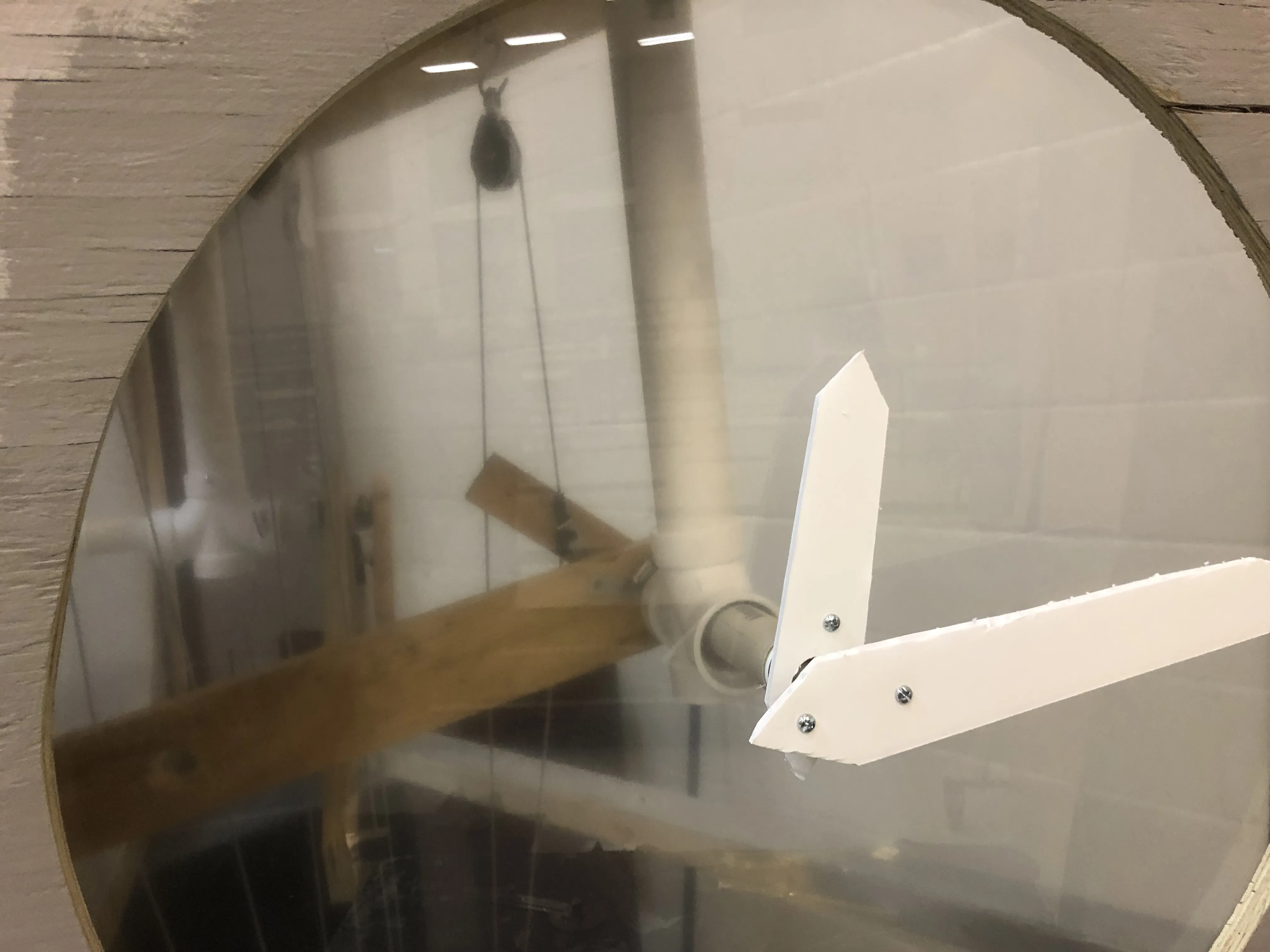
Through the plexiglass face you can actually see the inner workings — the wooden crossbar frame, the cables, the pulleys — like a transparent clock.
Each hand is moved by a cable attached to a counterweight. I calculated the radius difference I needed to have the hour hand move 1/12 the speed of the minute hand. We had two clock faces - so the cable was actually quadrupled. Two hour hands and two minute hands - attached to heavy weights and pulleys. As you moved the weight one half inch, you had 1/60 for the minute hand and 1/720 for the hour hand across two clock faces.
It all worked. It is hard to even explain it.
Operating the Clock
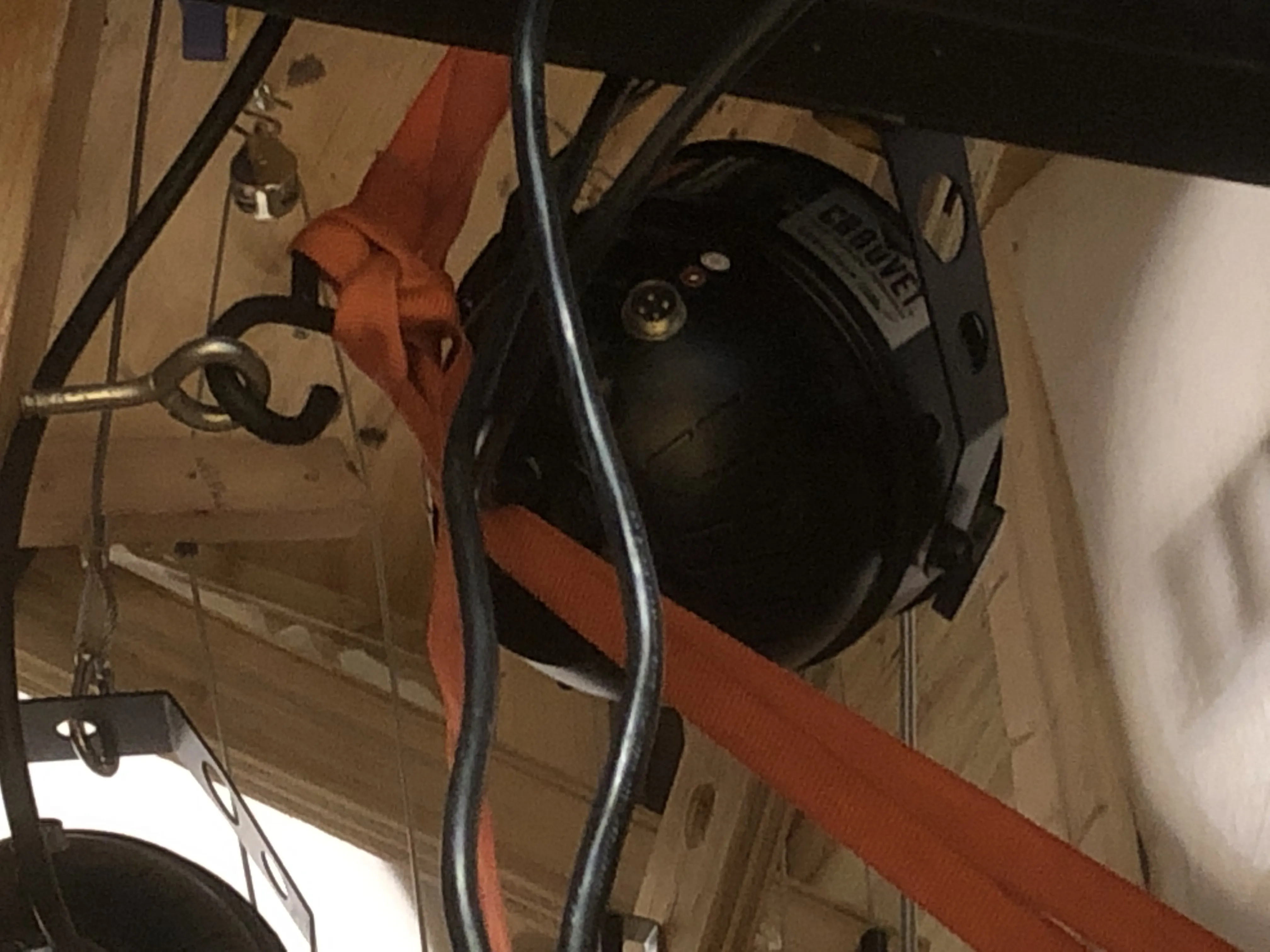
A stage crew kid — one of the smaller crew members was inside of the clock tower. He started the clock on cue 15 minutes ahead of “midnight”. Each tick mark on the scale represented one minute of clock movement. At the start of the ball scene, he began moving the weight down, one mark per minute, advancing the clock in “real time”.
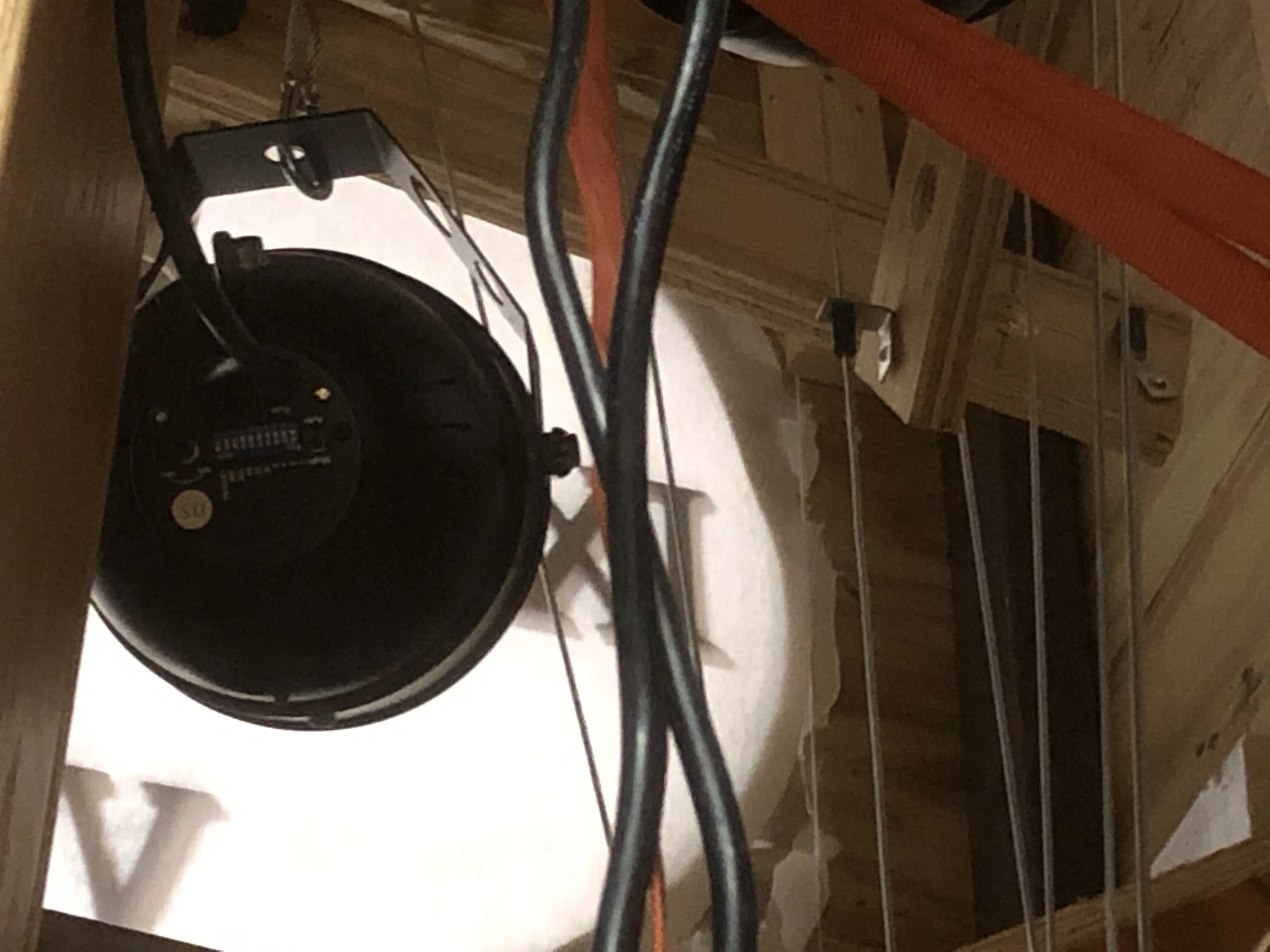
Building the Tower
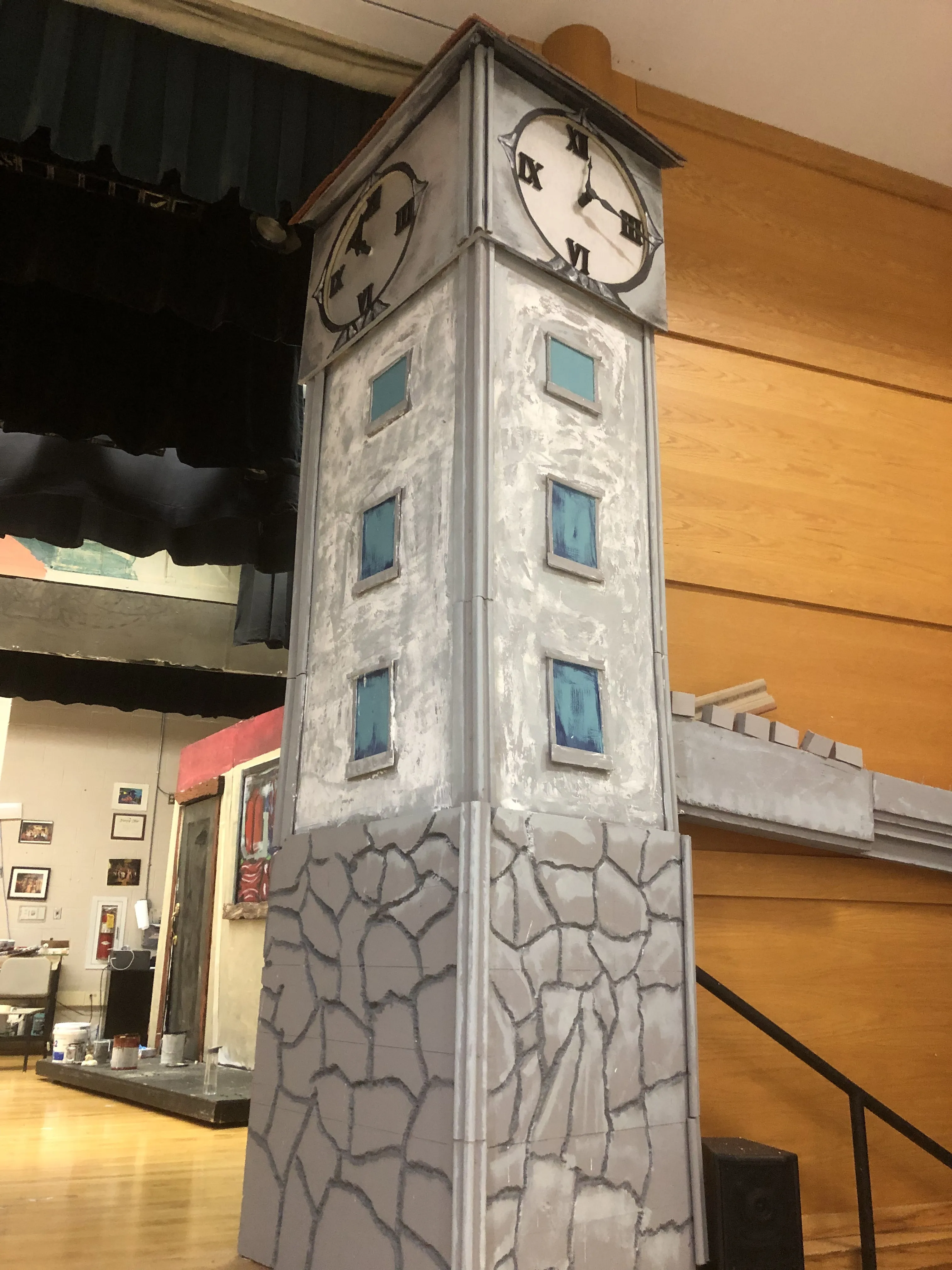
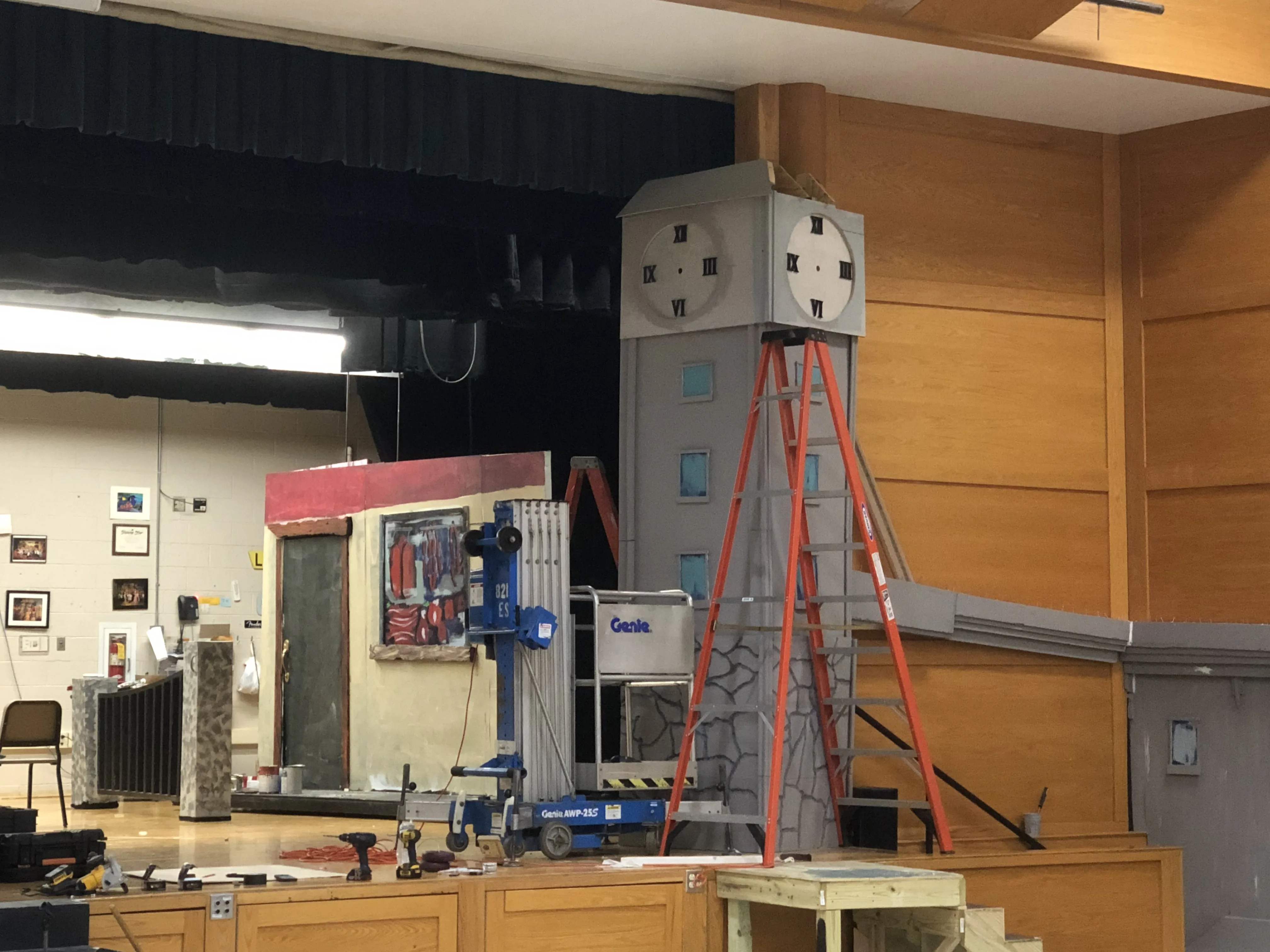
The tower itself is a tall, tapered structure — full proscenium height — with the clock mechanism box at the top and a stone-painted base. It was assembled in sections so it could be transported, stored, and erected on site.
The Clock Box
The top section is a box built to house the clock mechanism on two faces — front and side, so the clock is visible from anywhere in the house. The box has a small peaked roof covered in hand-cut foam “terracotta tiles” painted in brick red.
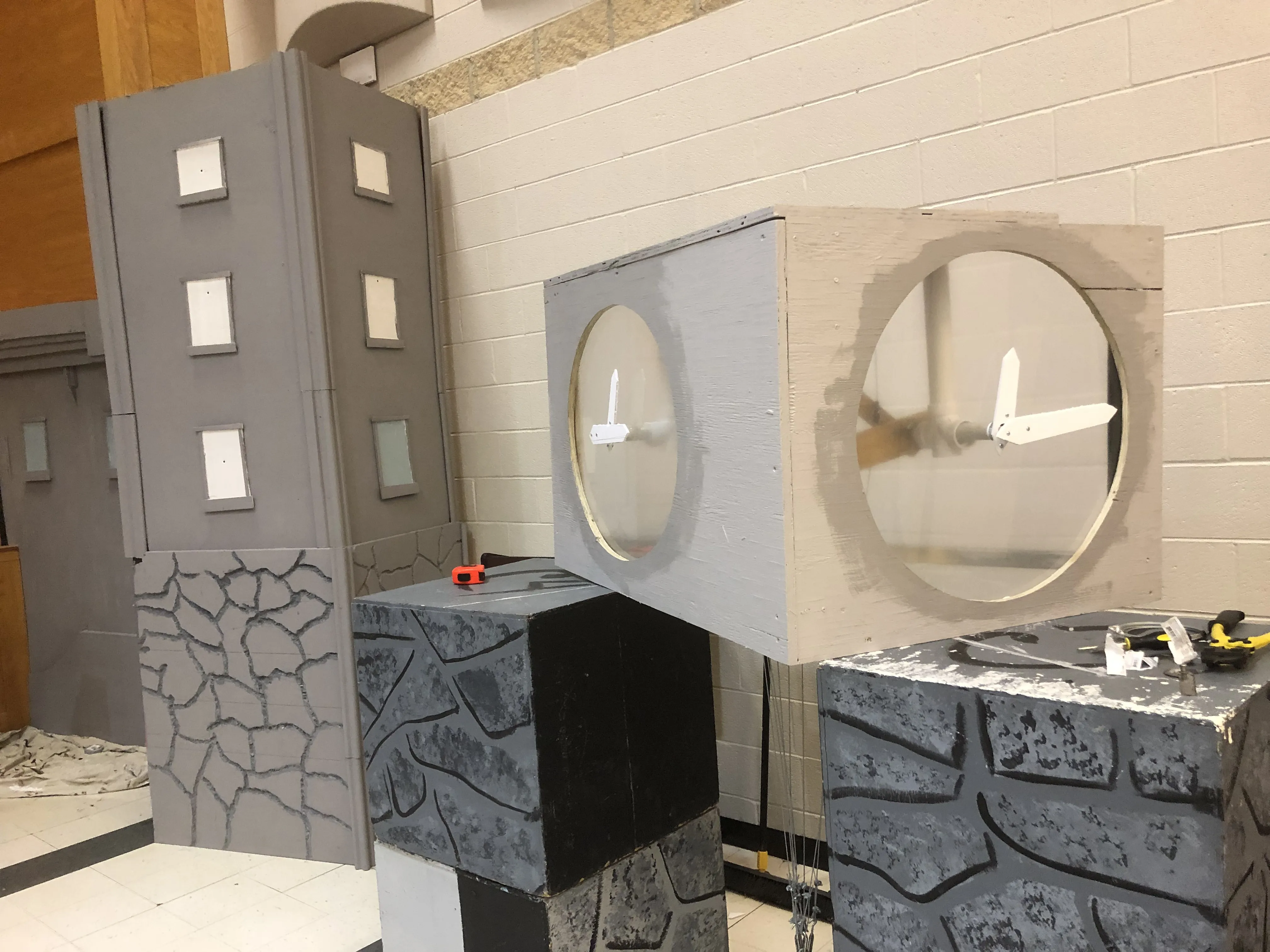
The Tower Body
The tower shaft is painted to look like a stone building — gray masonry on the upper section and a rougher cobblestone pattern on the base. The windows are cut openings backed with blue cellophane that glow when lit from inside. The effect reads immediately as a European clock tower.
Installation
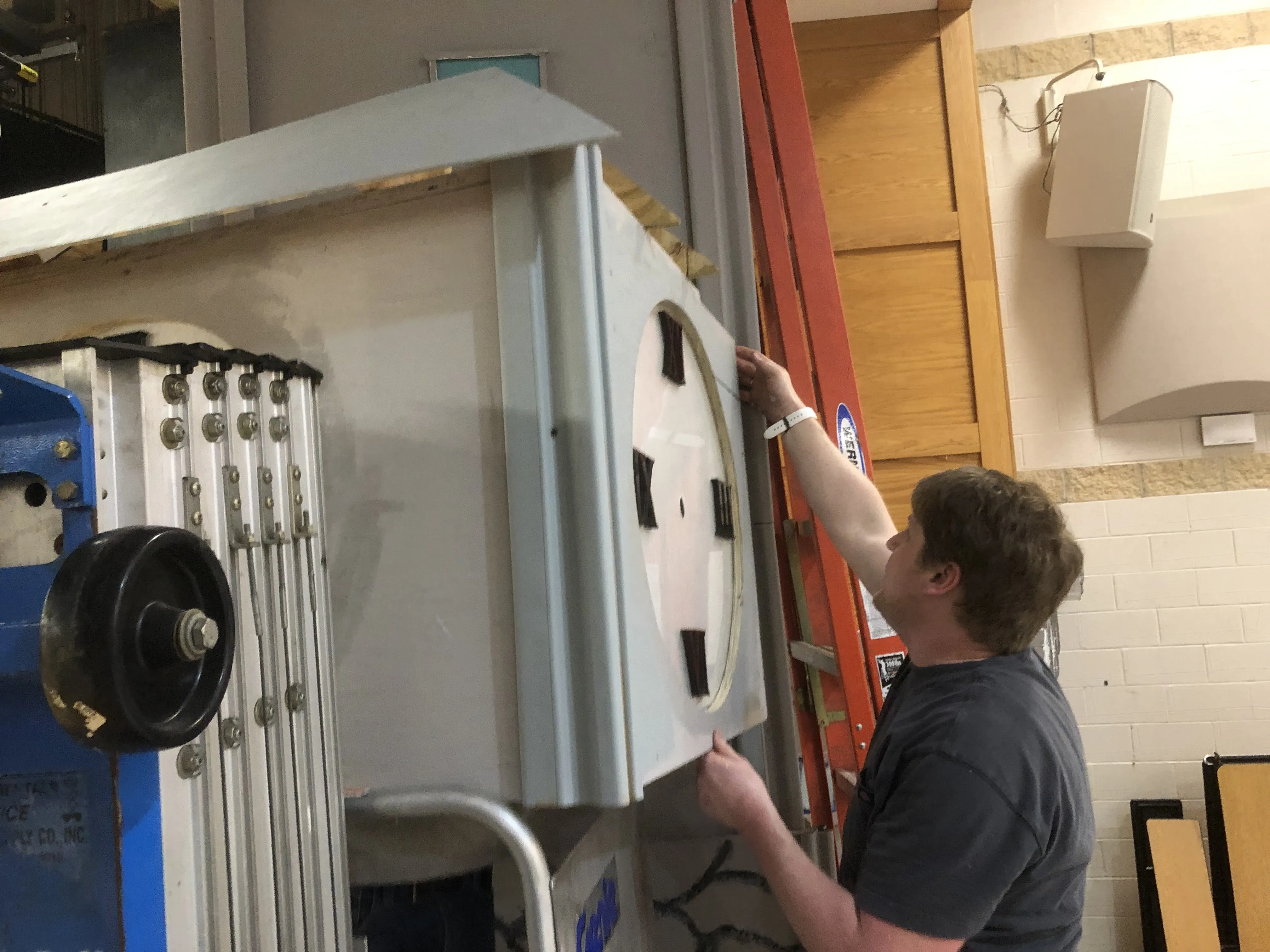
Getting a full-proscenium-height structure up against the stage wall required a Genie AWP-25S personnel lift. This is the kind of equipment most school productions don’t budget for — but when you’re working at heights and need to make precise connections at the top of a tower, there’s no safe substitute. We rented it for load-in day.
The Lighting
Lighting makes or breaks this effect. The clock face needs to glow. The tower needs to feel alive.
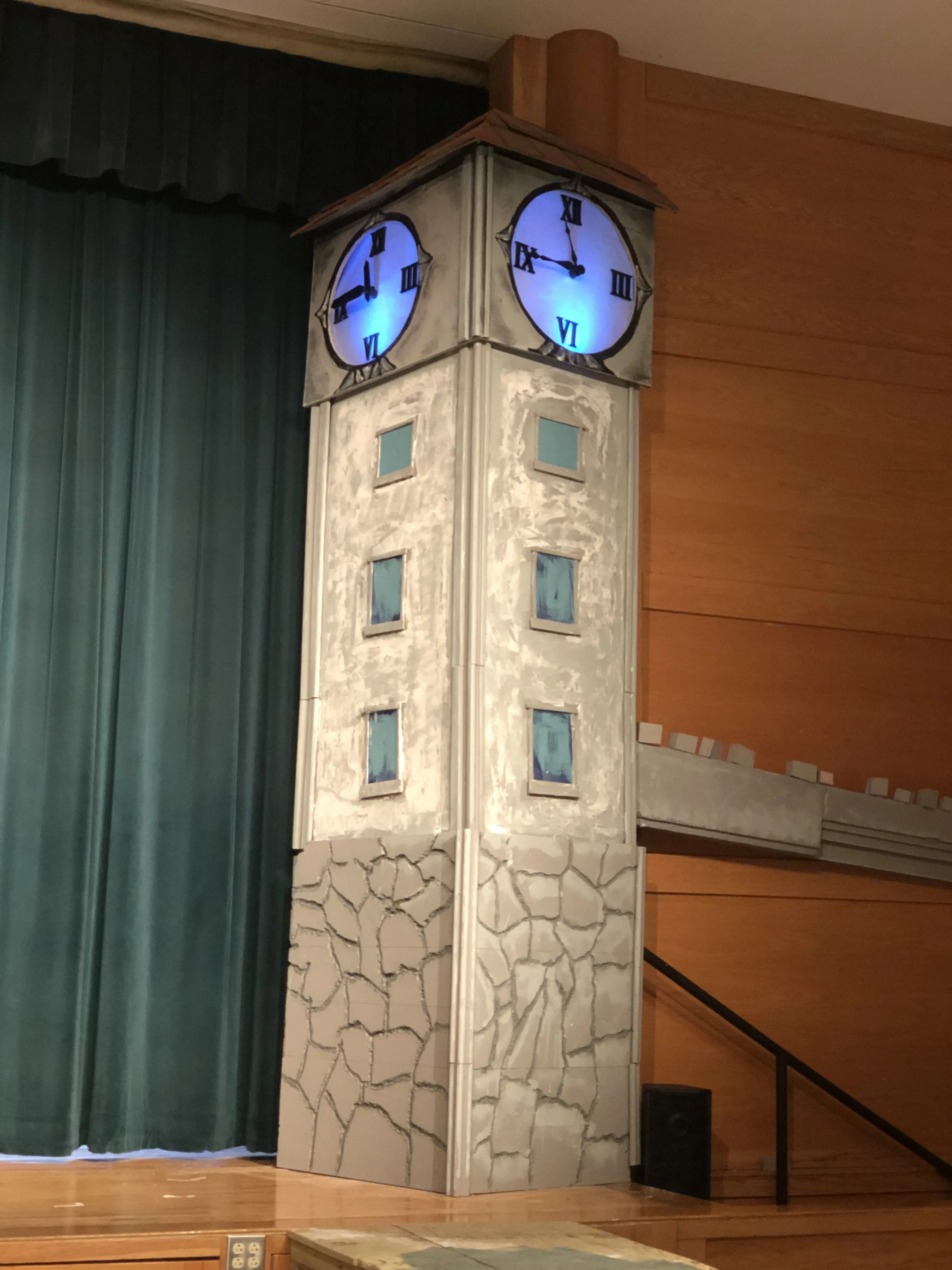
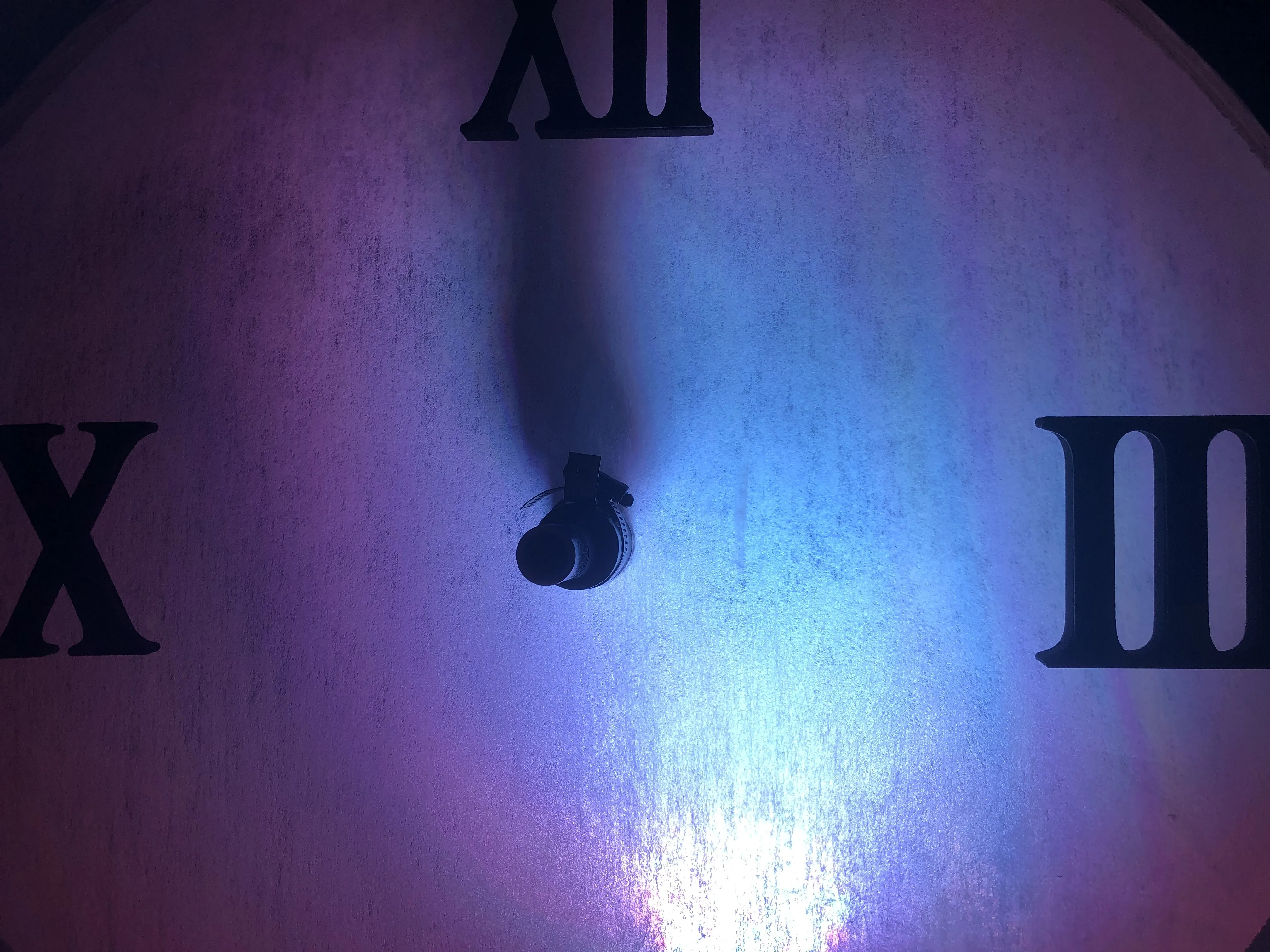
Inside each clock face I mounted PAR can lights — broad-beam theatrical fixtures that flood the plexiglass evenly from behind. During the ball scene, the color shifted: starting neutral white, moving through blue-white as midnight approached, ending in that cold, ominous glow that said time is almost up.
The Performance
Here is the clock tower doing exactly what it was designed to do — dominating the stage, glowing, telling the story.
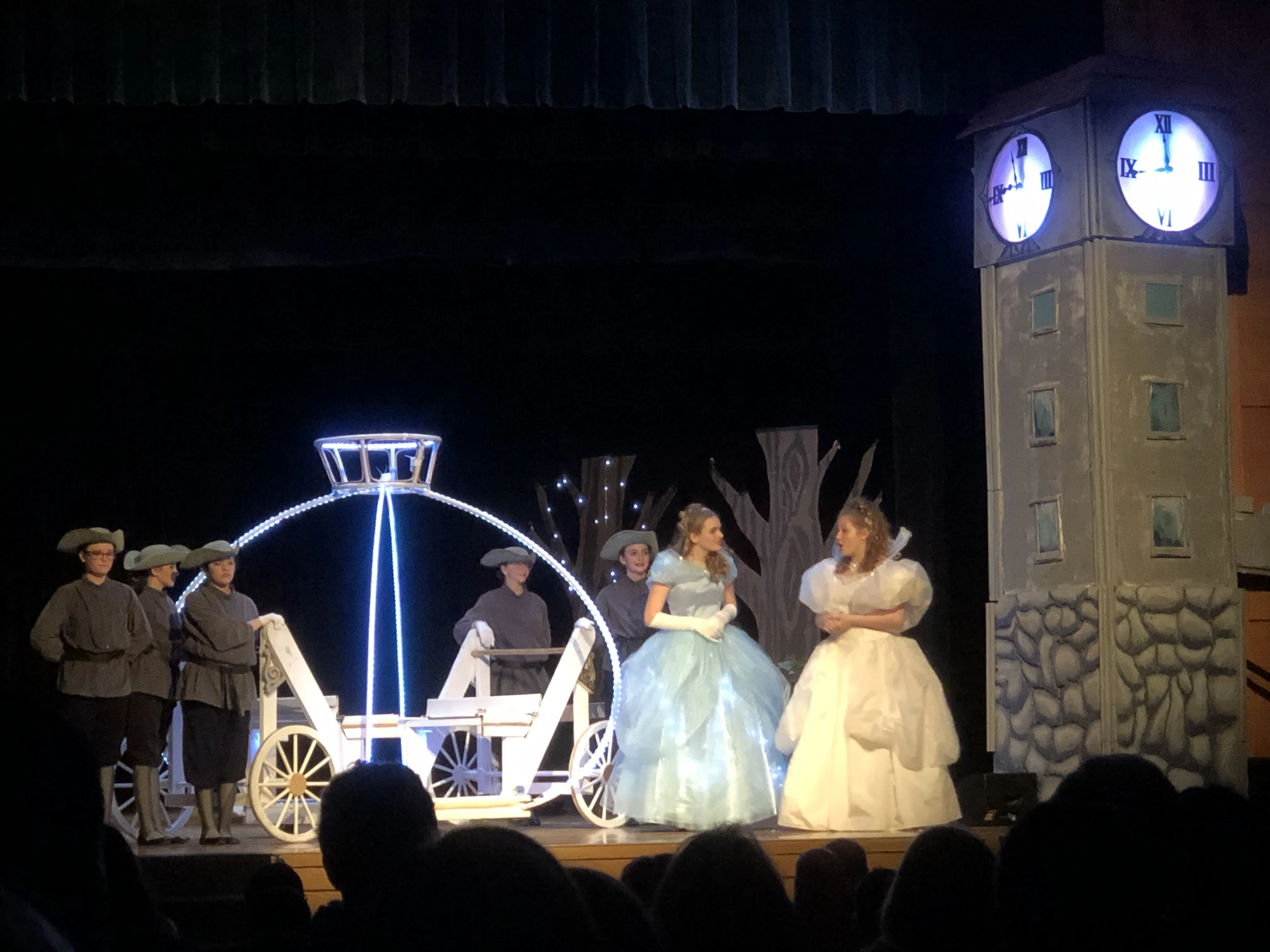
The ball scene at its height — Cinderella in her blue gown, the fairy godmother, the LED-outlined carriage. The clock in the background showing the time is nearly up:
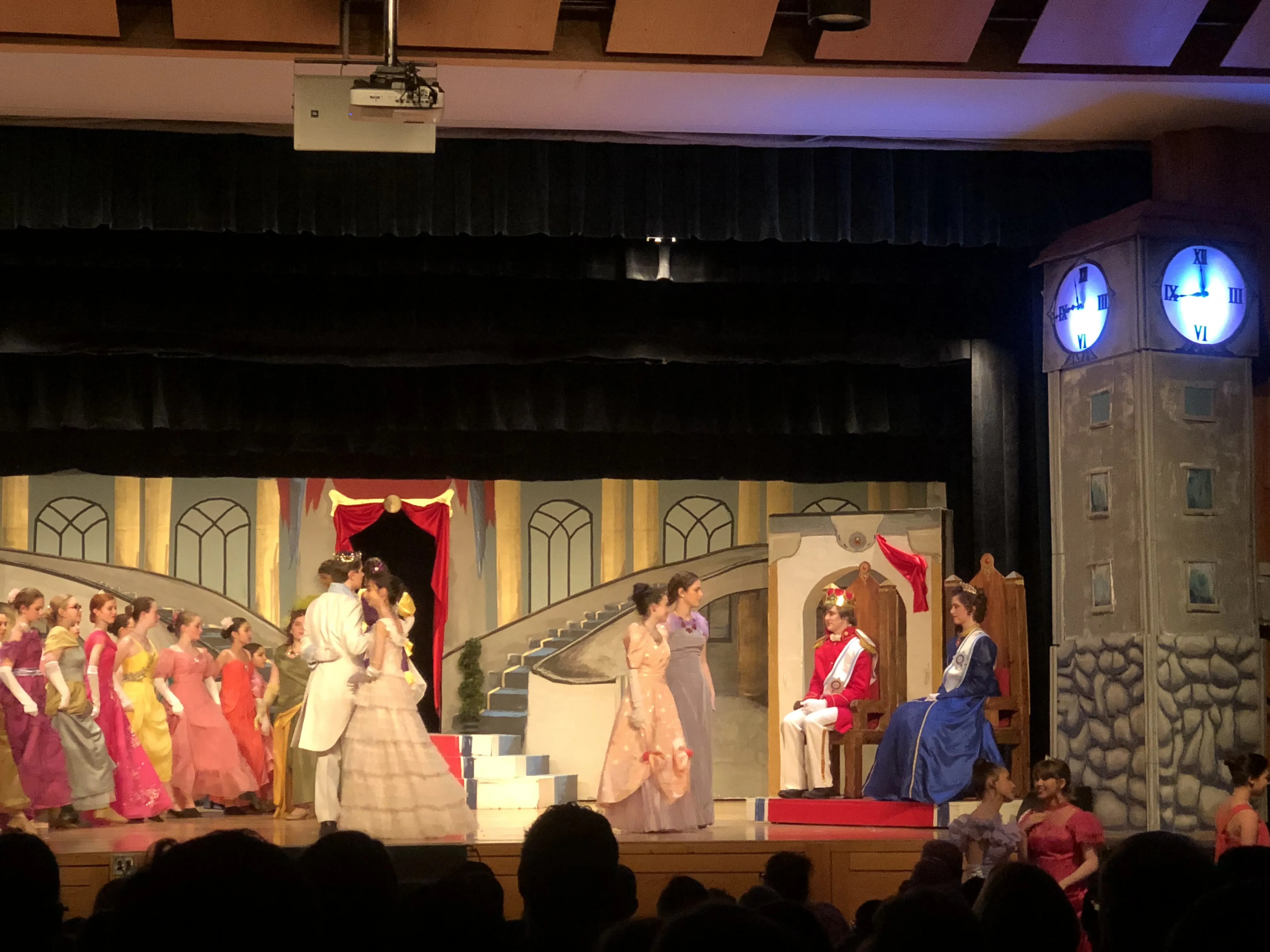
The full court scene — the king and queen on thrones, the prince, the guests, everyone — and in the corner, the clock, ticking:
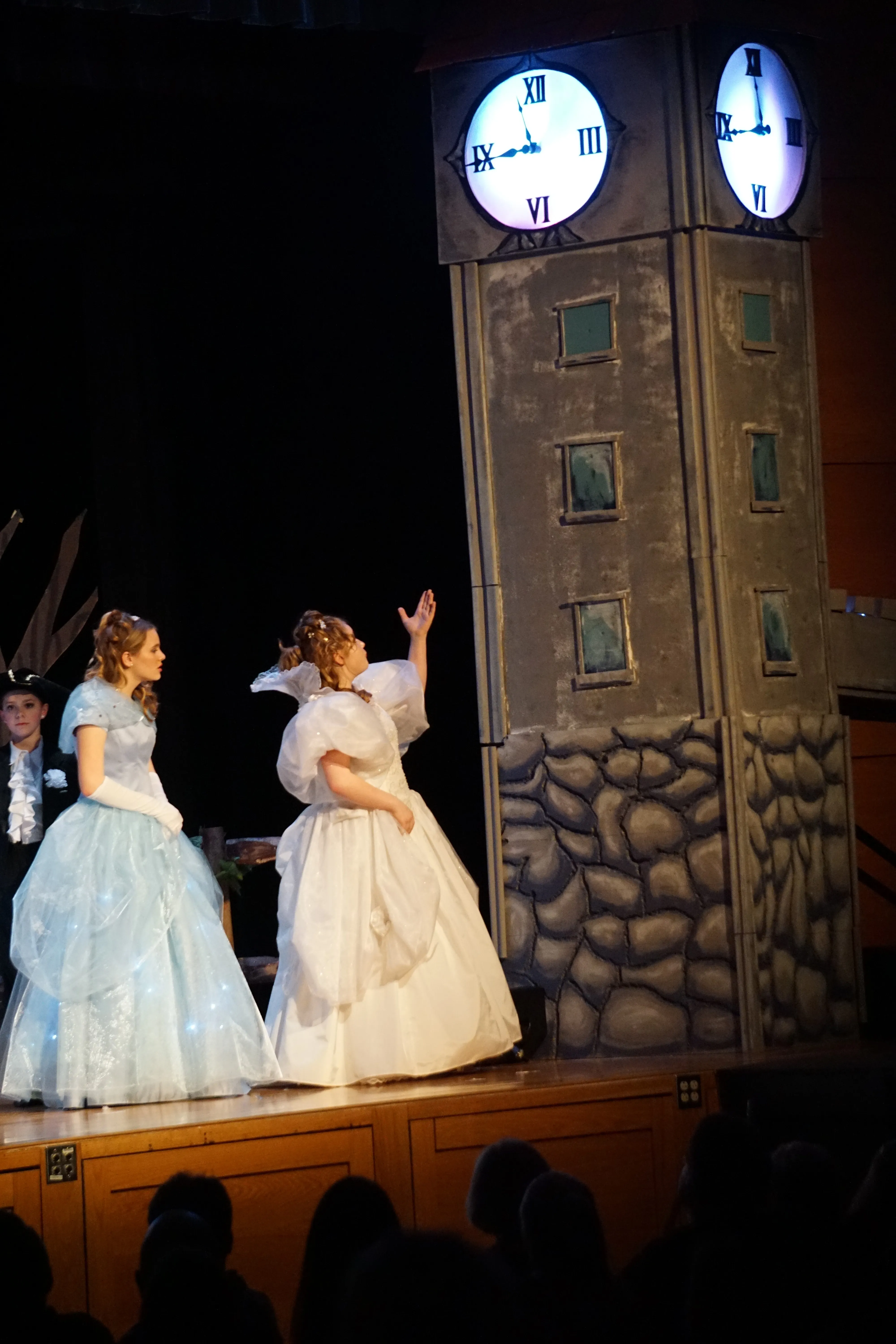
The midnight moment — Cinderella on stage with both hands pointing toward XII:
And the clock itself at the stroke of twelve — blazing white, both hands straight up:
Tips If You’re Building This
- Use plexiglass for the clock face. It’s rigid, easy to cut into a circle with a jigsaw, and it transmits light beautifully. Frosted plexiglass diffuses the PAR can evenly; clear plexiglass lets the audience see the mechanism (which is a feature, not a bug).
- Nested PVC for the hand pivot. Use schedule 40 PVC — the inner pipe for the hour hand, a slightly larger diameter outer pipe for the minute hand. Hose clamps make surprisingly effective bearings.
- Cable and counterweight beats motors. A motorized clock mechanism sounds easier but it’s harder to control, harder to repair, and harder to time precisely with live performance cues. A stagehand with a scale can stop, speed up, or rewind on a moment’s notice.
- Mark your scale clearly. Give your stagehand a clearly marked scale with large, easy-to-read increments. Low light, adrenaline, and a live audience are not forgiving of ambiguity.
- Rent the lift. If your tower is more than 8 feet tall, rent a personnel lift for load-in. It’s not expensive for one day and it’s the difference between a safe installation and a dangerous one.
- Start the clock before the audience arrives. Set it to 11:45 before doors open. That image — a house full of people watching a clock already counting down — is worth every hour of build time.
More Set Building Projects
-
Building Annie: Lit Marquee Signs, a NYC Street Scene, and a 12-Foot Christmas Tree — Illuminated Broadway-style marquee signs, a carved foam mantelpiece, the Oxydent radio studio, and the Warbucks mansion.
-
Building Fiddler: How We Made Fruma-Sarah Fly — A custom wheeled seesaw rig to make the ghost of Fruma-Sarah glide across the stage and soar 15 feet in the air.
-
Building High School Musical: A Cafeteria Inside a Cafeteria — Reusable platforms, industrial pipe railings, and a permanent DJ booth.