Building The Music Man: Train Cars, Marian's House, and a Real Piano

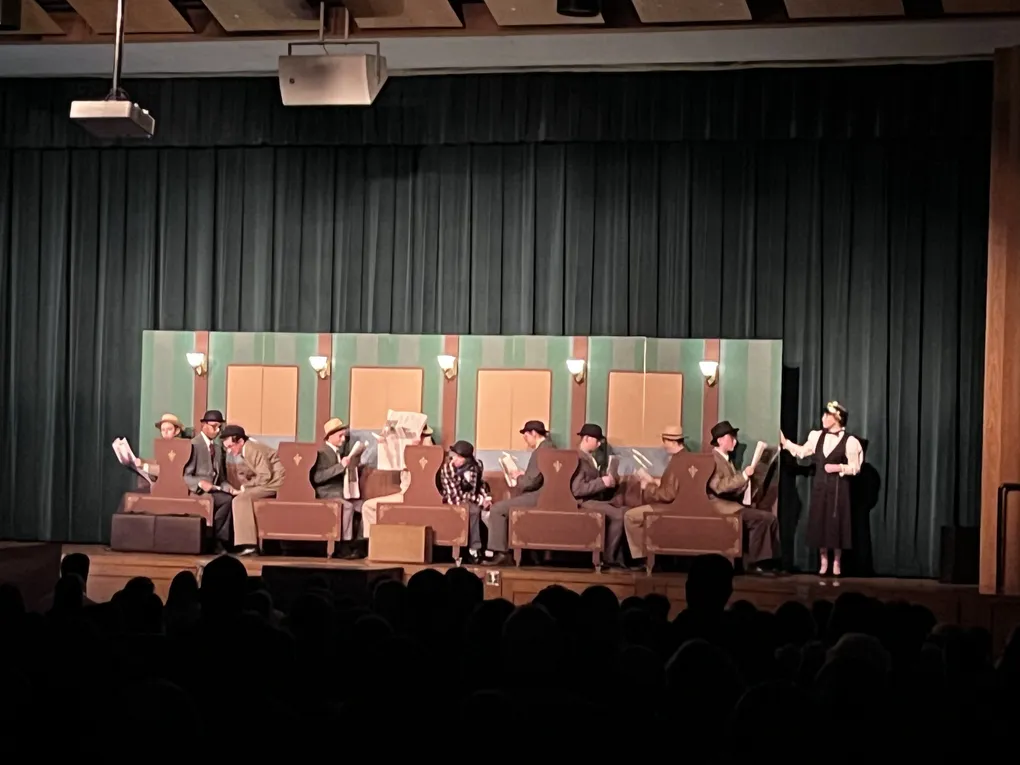
The Music Man opens on a train. That’s your first challenge as a set builder — before a single word of dialogue, you need the audience to believe they’re looking at a passenger car moving through Iowa in 1912.
The Train Cars
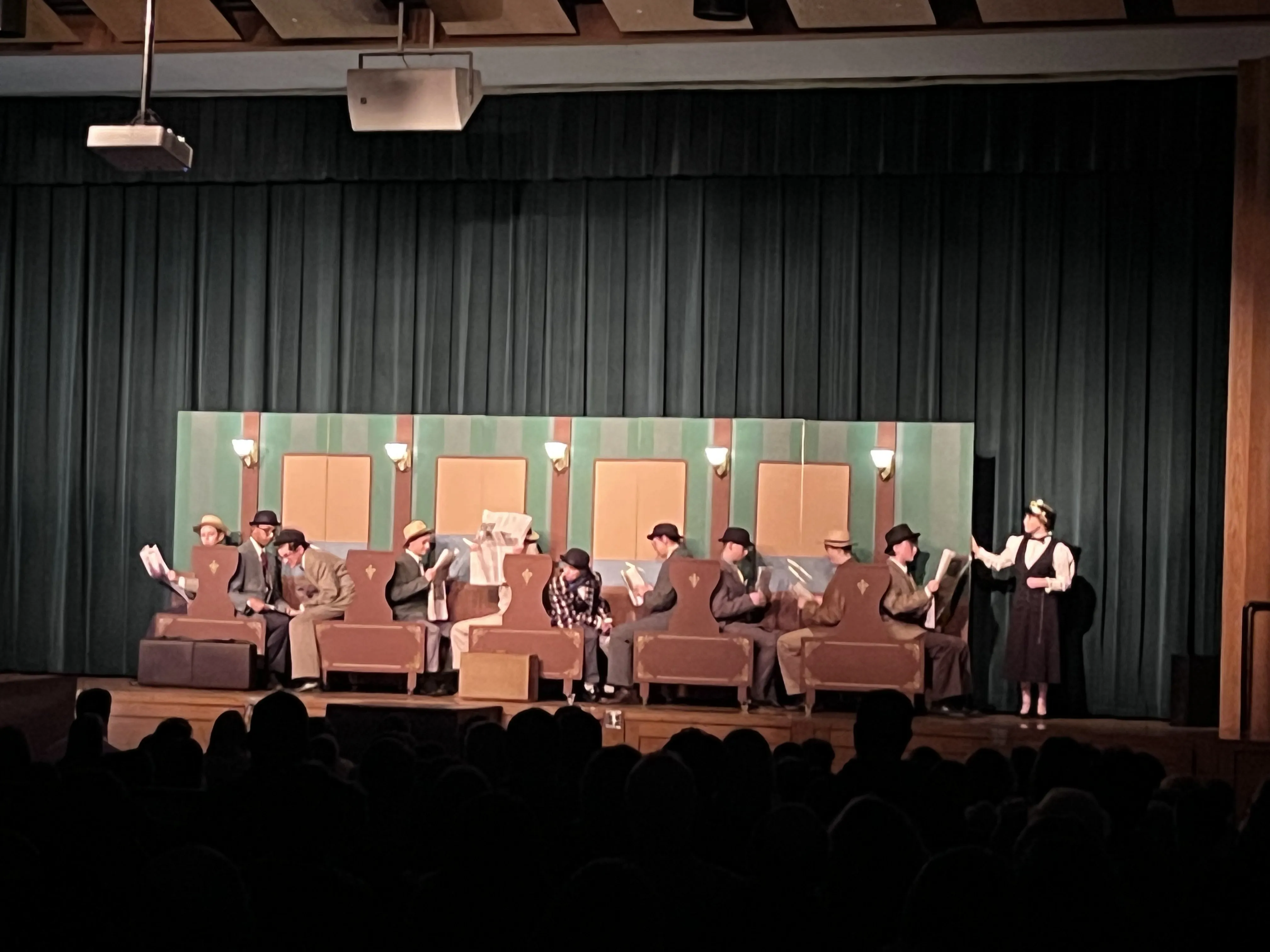
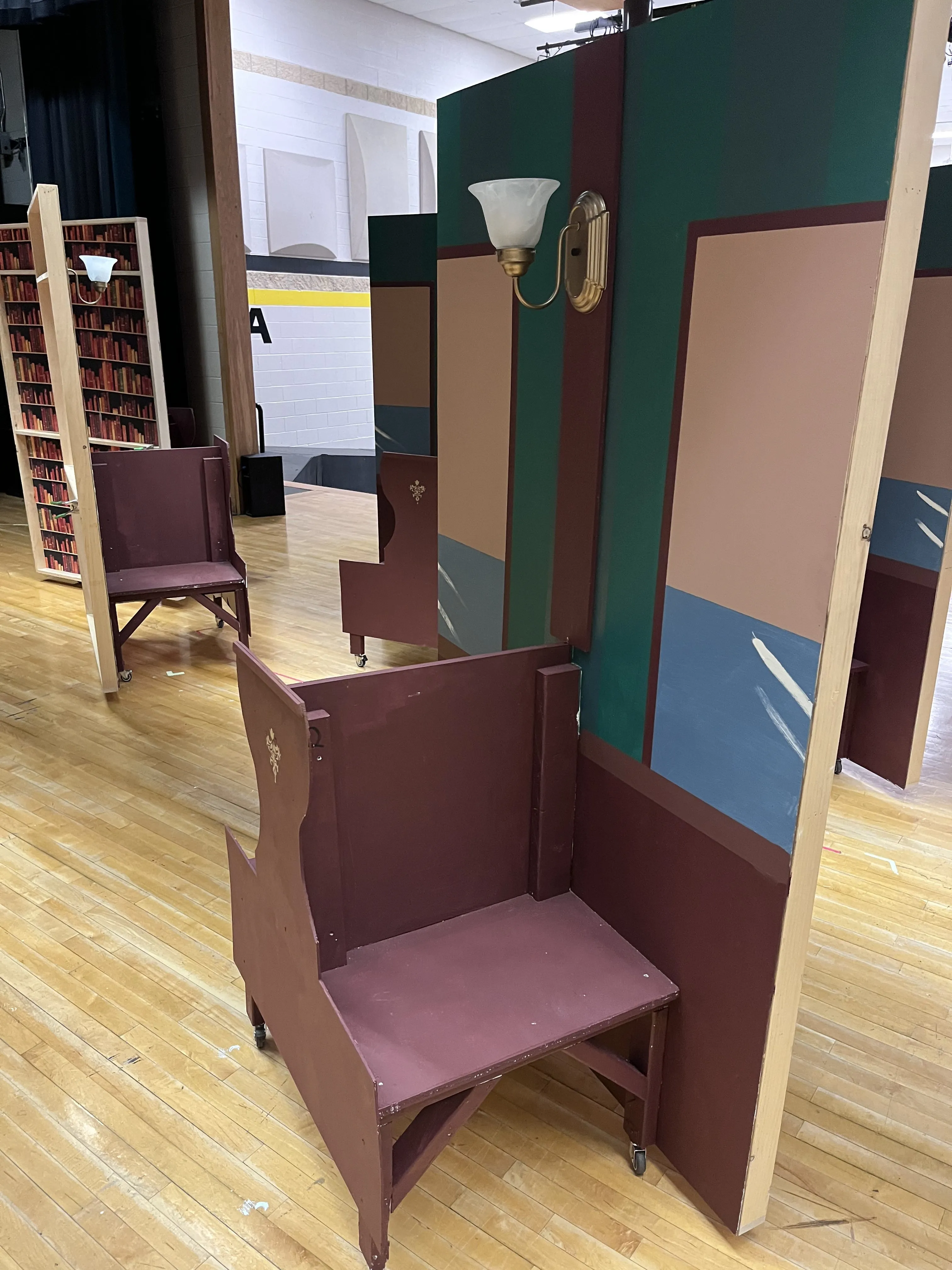
I built five train cars — booth-style passenger sections, each a pair of plywood seats facing each other across a center aisle. Simple 2x3 frames, caster wheels on the bottom.
The detail that makes them feel real is the lighting. Each car has a wall sconce with a rechargeable battery unit and a remote control. Before the scene, you charge them up. Someone hits the remote when the curtain opens and all five cars glow warmly from inside. It reads immediately as a night train.
The Library Flip
The outer face of each car is painted as a library bookcase — shelves, book spines, the works. For the library scene, the cars roll back on from the other side, bookcase face out. The same five pieces that were a train are now the River City Public Library. Same build, two scenes.
Marian’s House
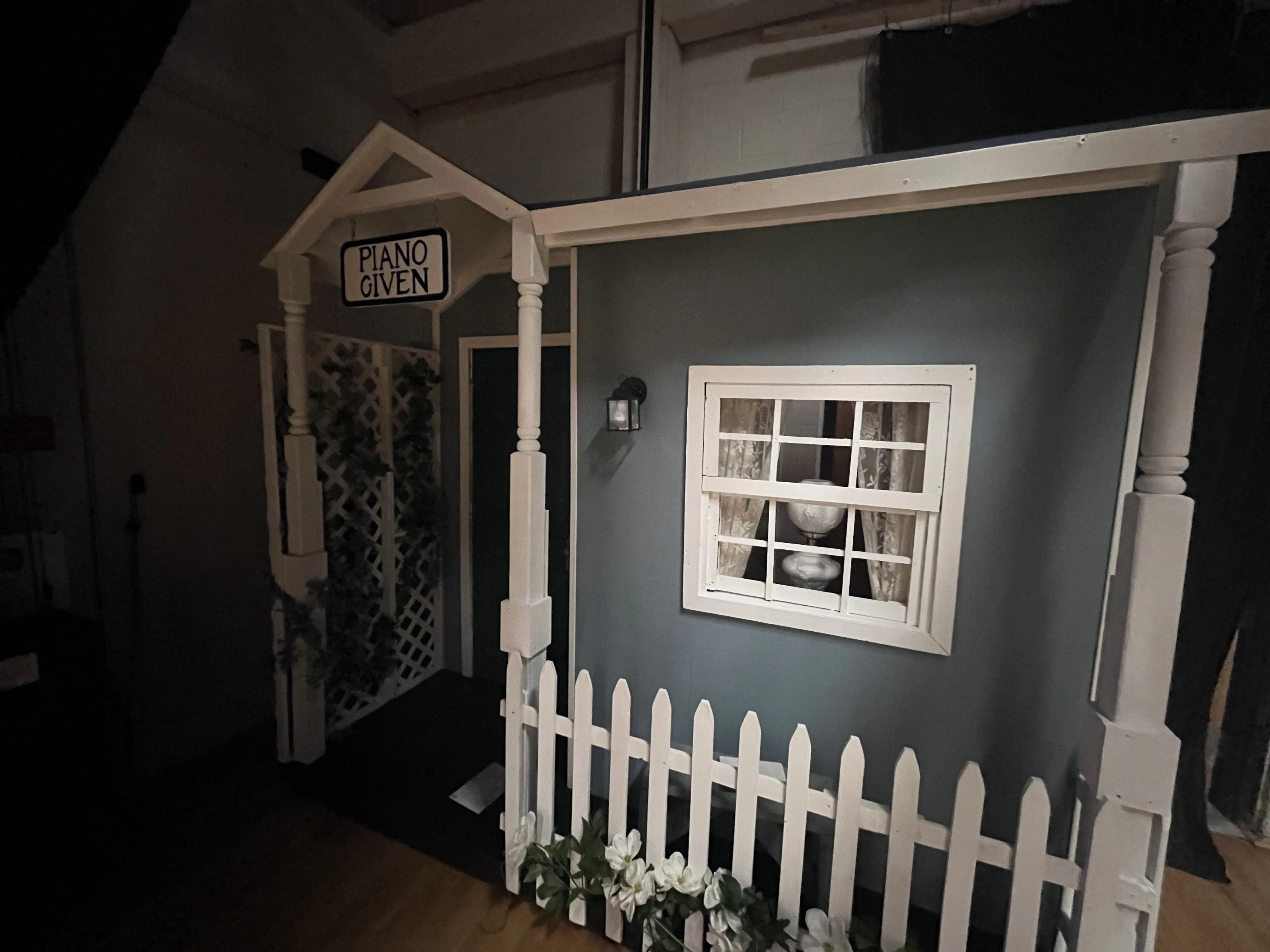
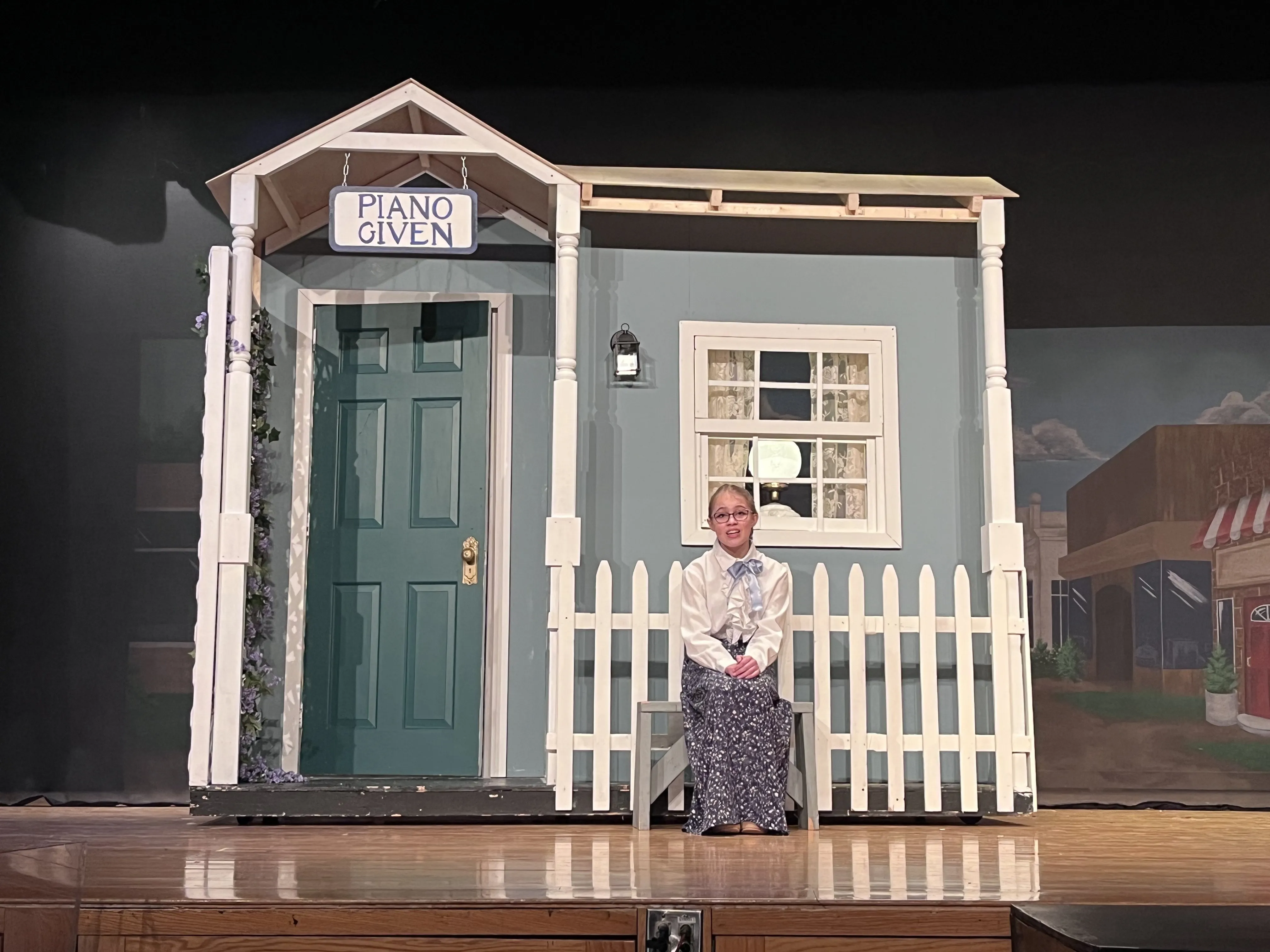
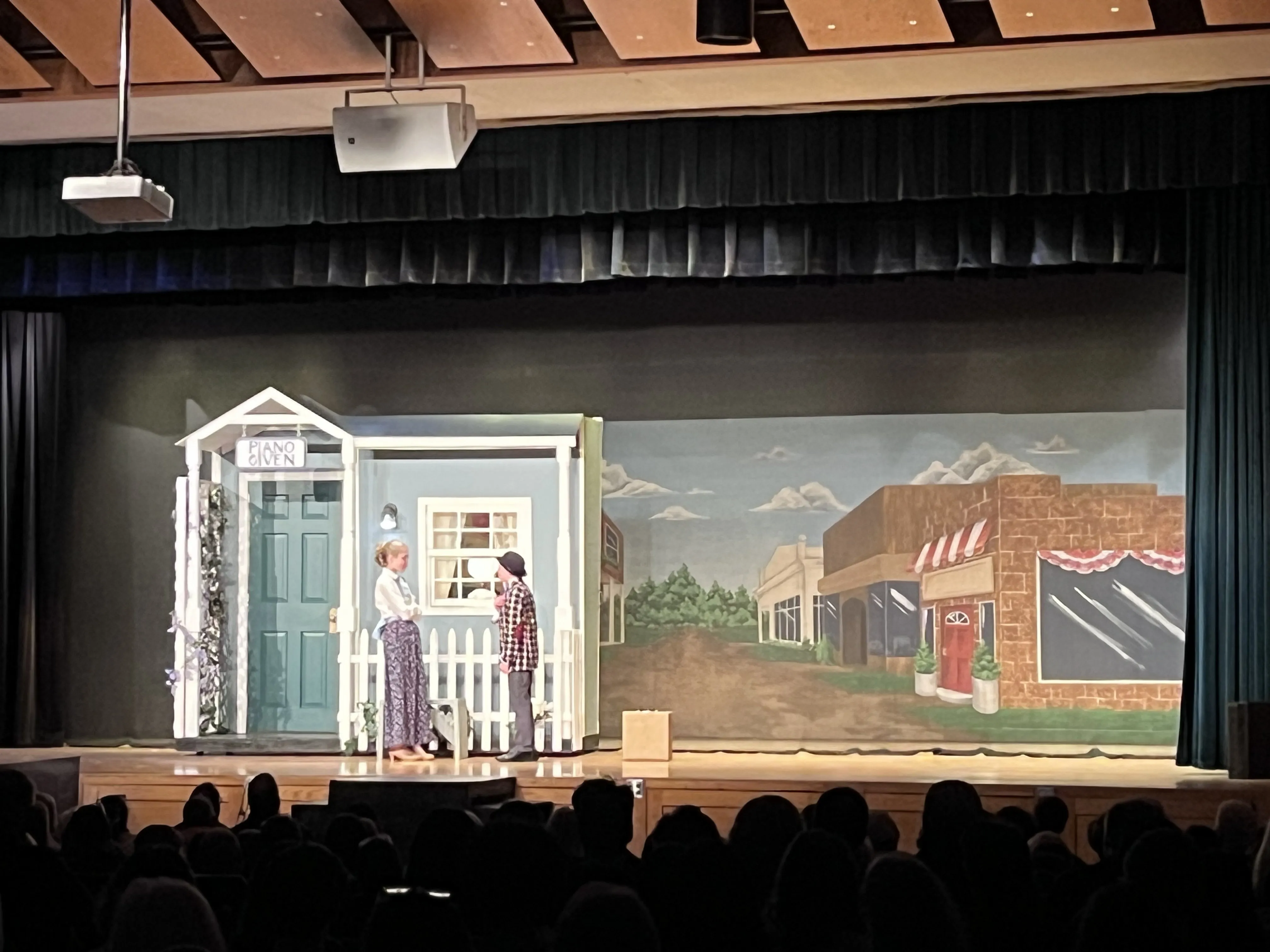
Marian needs a house. I built a flat with a working door, a porch roof with turned columns, a window with curtains, and a white picket fence along the front. The “Piano Lessons Given” sign above the door does a lot of the storytelling on its own — the audience knows exactly who lives here before she appears.
The Interior
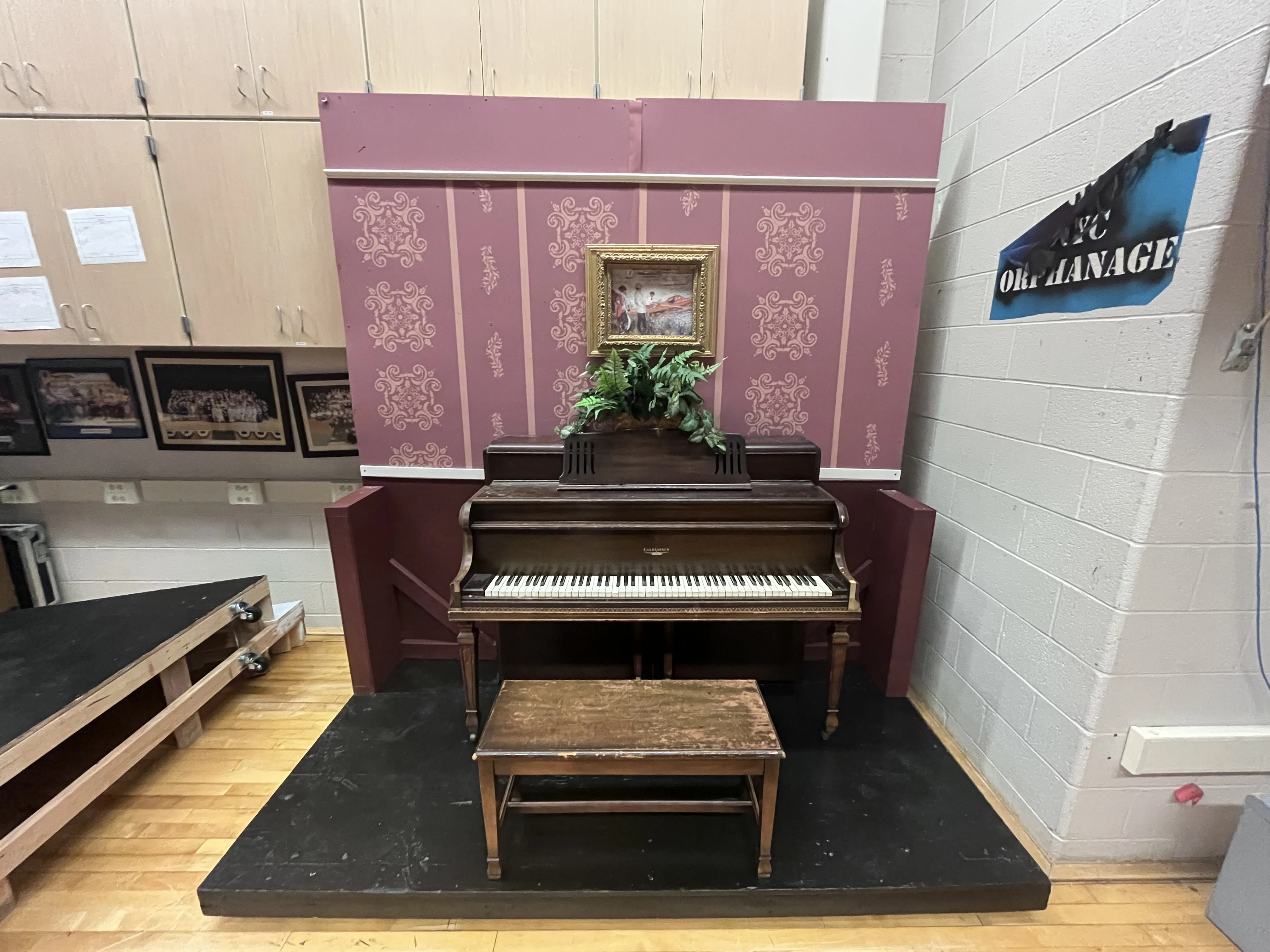
Flip the flat around and you have Marian’s parlor. My wife Stephanie painted a Victorian wallpaper pattern by hand on the interior side — a full stenciled repeat pattern that genuinely looks like wallpaper from the audience. The piano sits in front of this flat for the parlor scenes.
The Piano
Someone near Reading was giving away a real upright piano. We drove out with a U-Haul, loaded it up, and brought it home. A real piano on stage is worth the effort — Marian actually plays, and you can’t fake that.
Getting it onto a rolling platform required a furniture dolly and some careful coordination. The platform has heavy-duty casters rated well above the load. Once it was up, one person could move it.
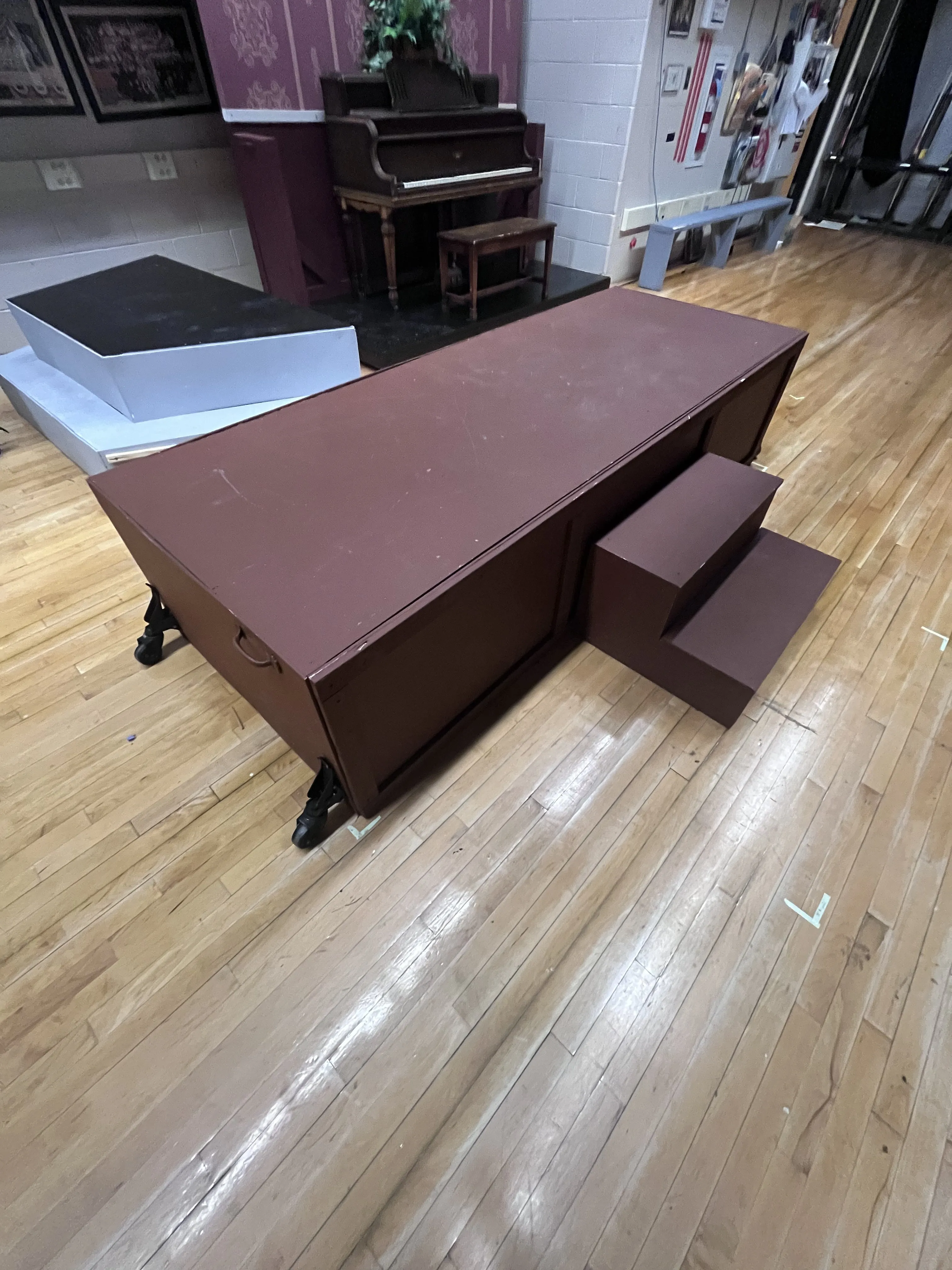
The piano rolled into position for every parlor scene and back to the wings when it wasn’t needed.
The Platform
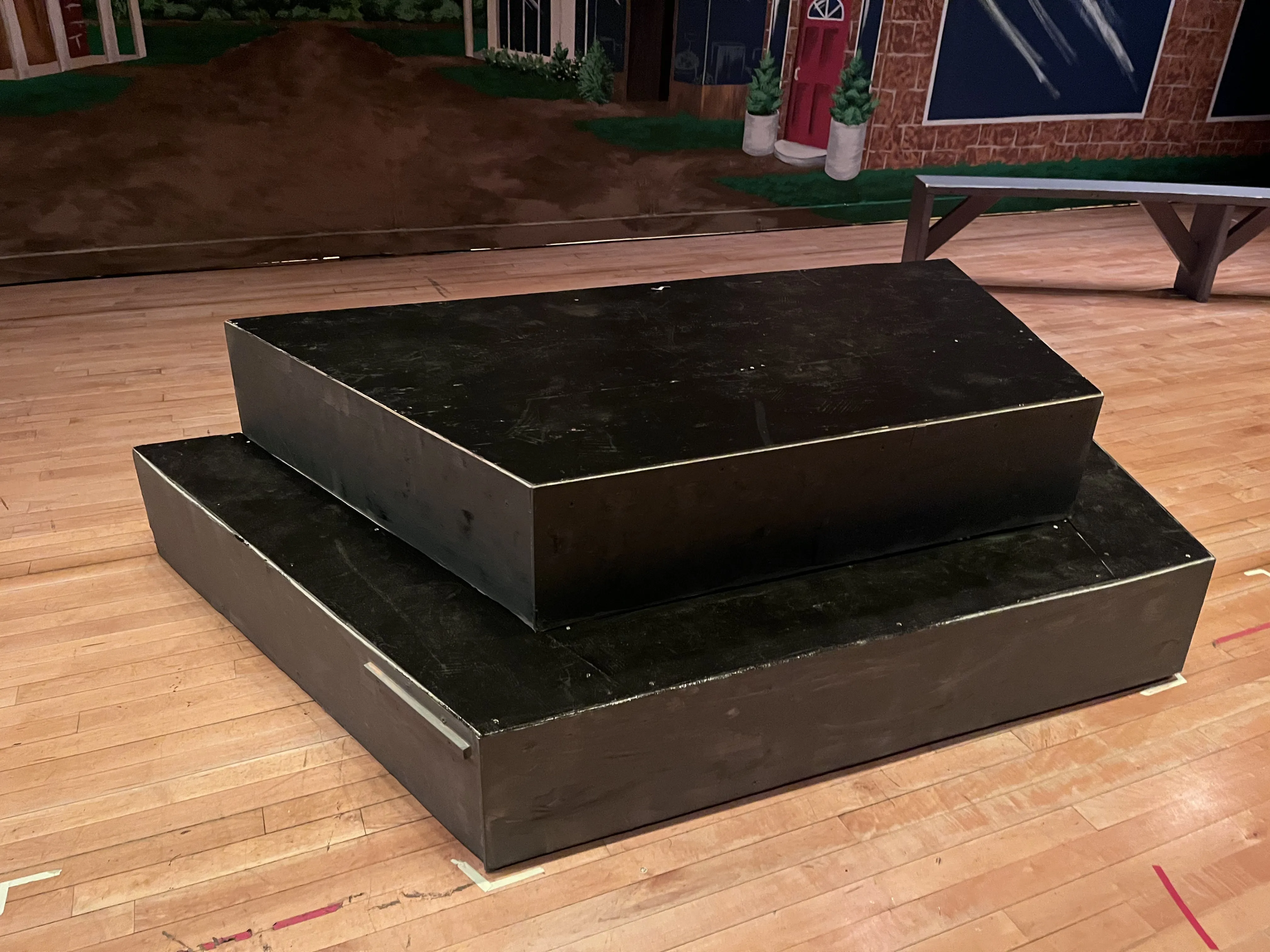
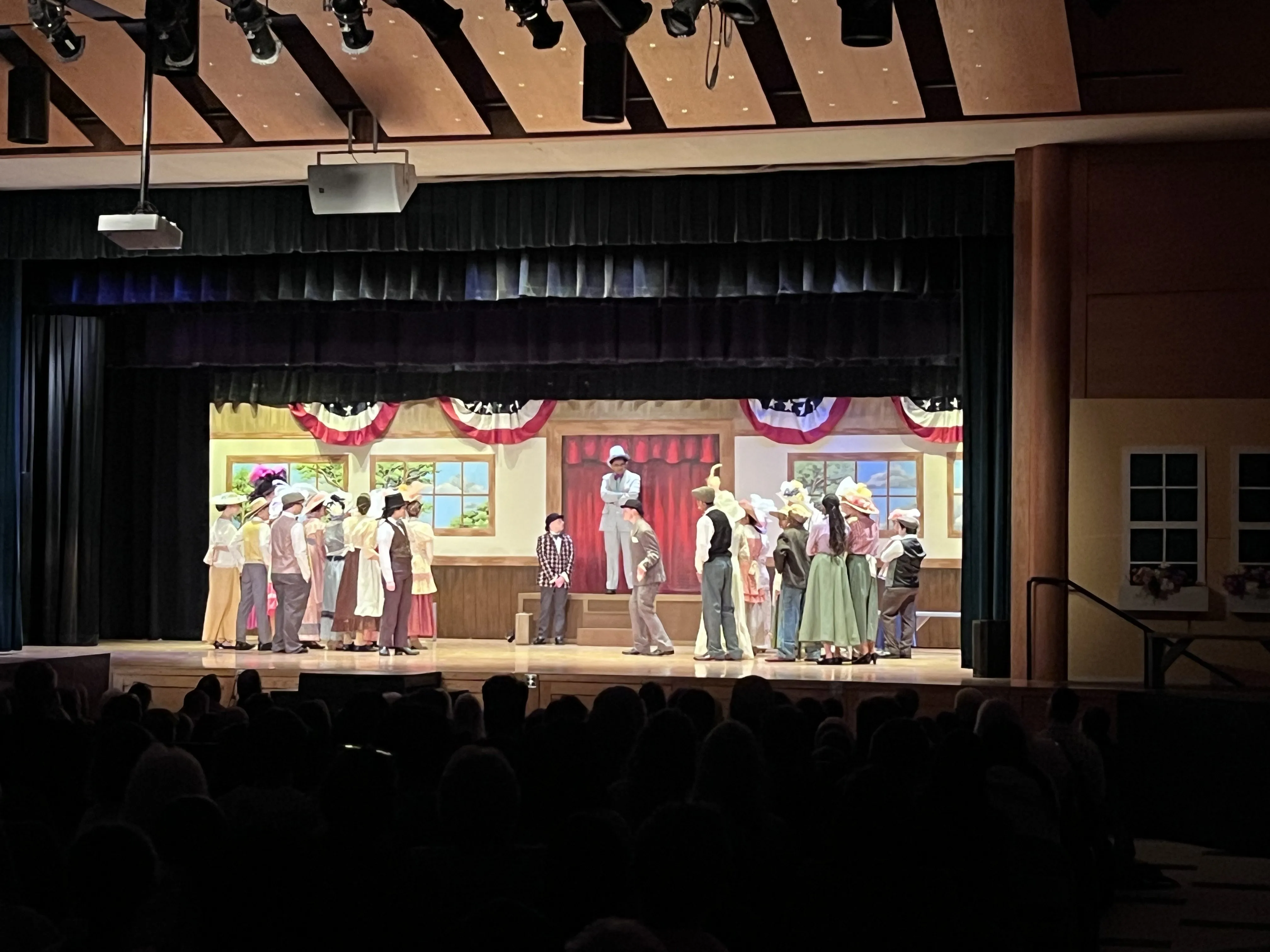
For the big town scenes, Harold Hill needs to stand above the crowd. I used a simple two-tier platform — two stacking boxes, both reused from previous shows. Nothing fancy. It just gives him somewhere to be the center of attention.
Tips If You’re Building This Show
- Build the train cars double-sided. The train/bookcase flip is the most efficient build decision I made. Same five pieces, two completely different scenes.
- Use rechargeable remote sconces for the car interiors. No wiring, no cable runs. Charge before the show, hit the remote on cue.
- The “Piano Lessons Given” sign does the work for you. Don’t skip the small details on Marian’s house — they tell the story before anyone opens their mouth.
- Get the piano if you can. A real piano onstage is worth the logistics. Put it on a properly rated rolling platform and one person can move it.
- Design every platform to be reused. Standard box dimensions, bolt-together assembly. The pieces that served this show are already waiting for the next one.
More Set Building Projects
-
Building Annie: Lit Marquee Signs, a NYC Street Scene, and a 12-Foot Christmas Tree — Illuminated Broadway-style marquee signs, a carved foam mantelpiece, the Oxydent radio studio, and the Warbucks mansion.
-
Building Fiddler: How We Made Fruma-Sarah Fly — A custom wheeled seesaw rig to make the ghost of Fruma-Sarah glide across the stage and soar 15 feet in the air.
-
Building Cinderella: Engineering a Real Working Clock Tower — PVC pipes, cables, counterweights, and a stagehand with a scale to count down to midnight in real time.
-
Building High School Musical: A Cafeteria Inside a Cafeteria — Reusable platforms, industrial pipe railings, and a permanent DJ booth.